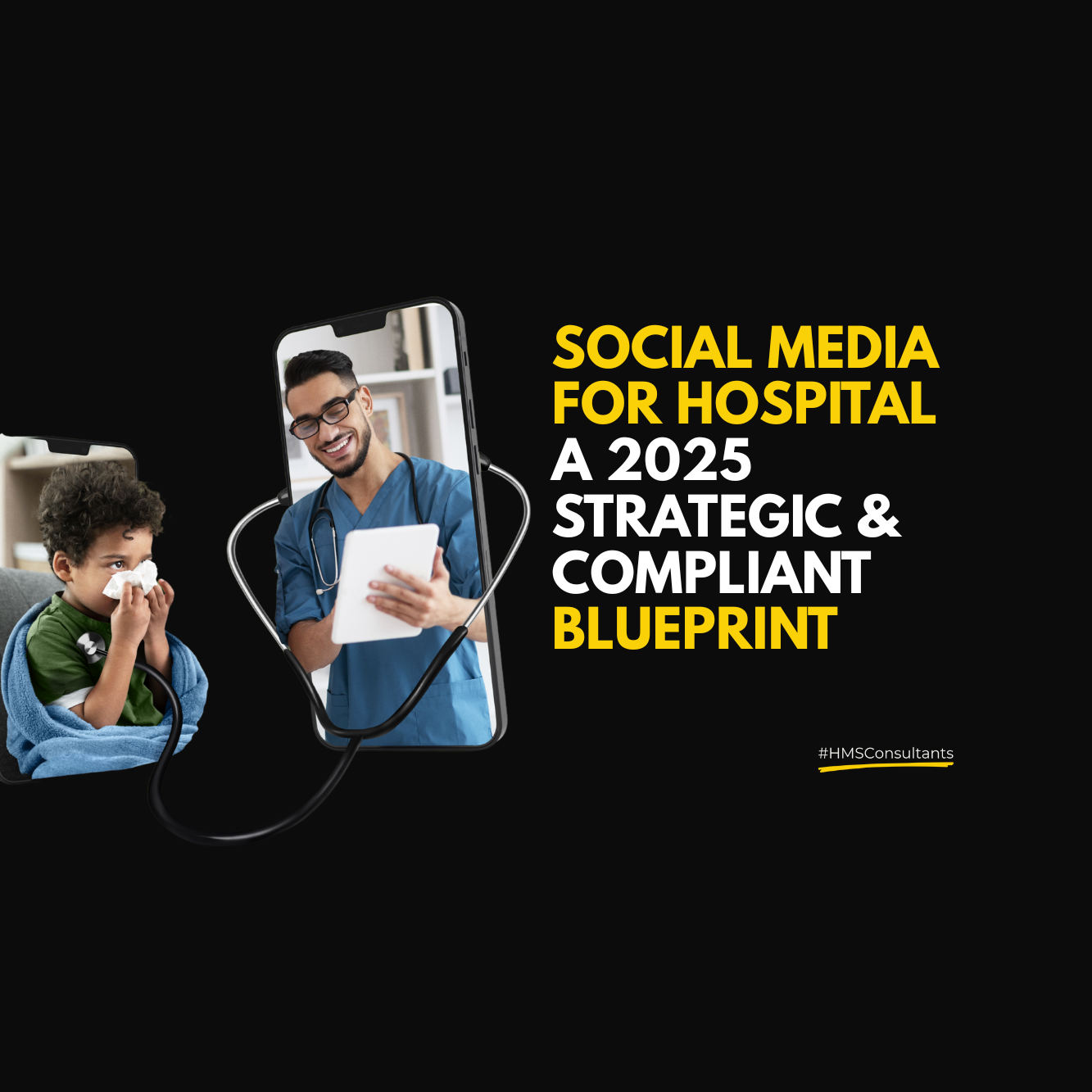
Social Media for Hospital | 2025 Blueprint
The New Digital Front Door & Strategic Foundations
Why Social Media for Hospital Is Essential in 2025
In 2025, social media isn’t just a marketing channel, it’s often the first interaction between hospitals and patients.
Platforms like Facebook, Instagram, and LinkedIn supplemented by short-video content to shape opinions, build trust, and frequently guide patient decisions .
Each post must be clinically accurate, patient-centric, empathetic, and compliant with India’s NMC, UCPMP, and DPDPA regulations providing guidance without risk.
Core Tactics: Educational & Interactive Content
- Informational Infographics & Carousels: Focus on trending health topics and local needs. Use clean headlines like “Top 5 Ways to Prevent Swine Flu” to support voice-search optimization .
- Medical Myth-Busters: Tackle misconceptions with sourced clarity e.g., “Masks don’t cause Viral Pneumonia.”
- Expert Explainer Videos & Live Q&As: Share short-form videos for tips (hand-washing, child CPR), and weekly Q&As to engage and reassure patients directly .
- Virtual Facility Tours (AR/VR ready): Offer immersive walkthroughs of OPDs and wards to reduce anxiety and build digital comfort .
SEO & E-E-A-T Integrations
- Embed the keyword “Social Media for Hospital” in headings and naturally within content.
- Optimize mobile-friendliness, speed, alt-text, and structured data to reinforce trust and discoverability.
- Embed short FAQs (“How can hospitals use social media responsibly?”) to capture snippet and voice-search traffic.
Engagement, Trust, & Rigorous Compliance Backbone
Authentic Engagement & Community Building
- Two-Way Communication: Actively respond to comments, messages, and inquiries within 24 hours. Use interactive tools like polls for example, “Which vaccination topic next week?”
- Geo-Targeted Awareness Ads: Use Facebook/Instagram ads in your city radius, refined by demographic needs. Promote teleconsults or free check-ups aligned with analytics .
- Staff & Specialist Spotlights: Highlight your nurses, support staff, and specialists. Focus on professionalism and empathy never individual health outcomes.
- Community Event Promotion: Live-stream screenings and camps with branded visuals. Reinforce your digital presence with offline efforts .
Strict Regulatory Compliance
- No patient testimonials, no surgery outcome videos NMC mandates against them, regardless of consent.
- Replace personal stories with anonymized statistics e.g., “Our diabetic management program improves A1c for 70% of participants.”
- Consent protocols: always use opt-in forms for patient visuals and video, with records. Include detailed privacy policies per DPDPA .
Offer transparent content approvals, with documented reviews by legal and medical teams.
Advanced Social Strategy & Data-Led Optimization
Measurement, Testing, and Insights
- Monitor reach, engagement rates, click conversions, and sentiment analysis via AI tools.
- Conduct A/B testing to compare formats e.g., whether Reels or carousels drive better engagement.
- Schedule quarterly compliance audits to confirm no violations of UCPMP, NMC, or DPDPA.
Future-Proof Your Strategy
- AI-Generated Personalization: Use AI for captions and hashtag suggestions under human supervision. Leverage predictive analytics to determine posting calendars.
- Interactive Features & Short-Form Dominance: Invest in quizzes (“Breast Cancer Risk?”), AR filters (e.g., handwashing trainer), and trending Reels content .
- Voice-Search Optimized FAQs: Answer conversational queries: “Where can I find a pediatric allergy test nearby?” Make answers scannable and voice-friendly.
- Crisis Communication Plan: Predefine a protocol for rapid response to misinformation or adverse events. Train a cross-functional social media crisis team.
Integrated Omnichannel Ecosystem & Next‑Steps Table
Seamless Cross‑Channel Coordination
- Synchronize messages across websites, patient portals, email, SMS, and social media to deliver unified, compliant patient journeys.
- Embed social content within newsletters and portal notifications (e.g., “Watch our doctor explain heart attack signs”).
- Use CDP segmentation to tailor messaging like prenatal care vs senior wellness, while securing informed opt-ins.
Final Thoughts
“Social Media for Hospital” isn’t just about promotion, it’s about establishing credibility, care, and ethical leadership in a regulated digital landscape.
Written by Dr. Omang Gupta
is something we strongly believe in, which means ‘Knowledge without application is the same as having no knowledge at all
Akhil Dave
Principle Consultant
Ready to take your Personal Brand to the next level?
Share your details below and we will connect with you to discuss your growth strategy.
Why Hospital Patient Experience Breaks Long Before Patients Complain
Hospital patient experience often breaks silently before complaints surface, weakening patient trust, referrals, and long-term loyalty despite strong clinical outcomes.
Why Doctors Digital Marketing Fails When It Is Treated as a Content Problem
Doctors digital marketing fails when it is treated as a content volume problem. Patients do not need more information they…
Why Marketing for Hospitals Should Slow Patients Down Before Asking Them to Decide
Marketing for hospitals works when patients feel guided, not rushed. Clear communication and patience build trust, helping decisions happen naturally.
Why Healthcare Branding Breaks When Hospitals Try to “Look Trusted” Instead of Building It
Healthcare branding breaks when hospitals focus on appearance instead of experience. Trust is built through consistency, clarity, and real patient…
Why Hospital Marketing Strategy Fails When It Starts With Channels Instead of Decisions
Hospital marketing strategy fails when channels are chosen before patient decisions are understood. Growth improves when strategy reduces decision friction,…
Why Healthcare Marketing Strategy Breaks When Hospitals Copy What Competitors Are Doing
Healthcare marketing strategy fails when hospitals copy competitors instead of understanding patient confusion. Imitation creates visibility, but only patient insight…