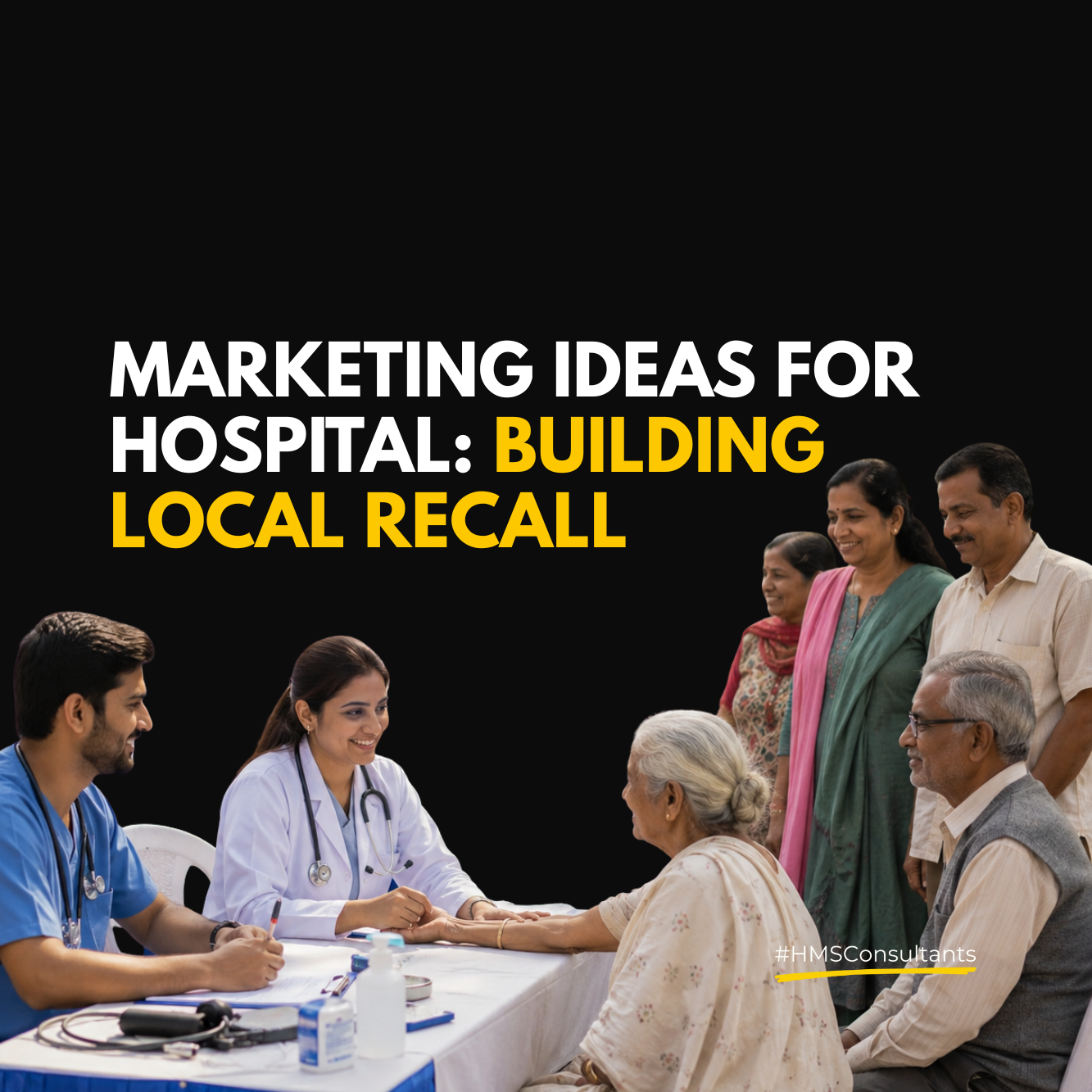
Marketing Ideas for Hospital: How to Use Local Community Presence for Better Recall

Marketing ideas for hospital should not always begin with digital campaigns, paid ads, or social media posts. For many hospitals, especially those serving a specific city or locality, stronger recall is built through regular community presence.
A hospital may have good doctors, services, facilities, and online visibility. But if people living nearby do not remember the hospital when a healthcare need arises, marketing may still feel incomplete. Local recall matters because patients often choose hospitals they have seen, heard about, or interacted with through trusted community activities.
This is where local hospital marketing becomes important. A hospital should not only be visible online. It should also be present in the area it serves’s health awareness, preventive care, and community conversations.
Why Local Recall Matters
Hospitals are not chosen casually. People may not need a hospital every day, but when a health concern comes up, they remember names that feel familiar, reliable, and accessible.
Local recall is built when people repeatedly see the hospital in useful and responsible ways.This can happen through health awareness programs, preventive check-up drives, residential society sessions, school health talks, corporate wellness activities, seasonal health campaigns, and local partnerships.
That is why community presence is one of the most practical marketing ideas for hospital growth, especially for hospitals that depend on patients from nearby areas.
Community Health Awareness Programs
Community health awareness is one of the strongest ways to build hospital recall. Hospitals can organise awareness sessions around common health concerns that people often ignore until symptoms become serious.
These sessions should not sound promotional. They should focus on simple and useful health education.
Hospitals can create awareness around:
- Diabetes
- Heart health
- Women’s health
- Bone and joint care
- Child health
- Eye care
- Cancer screening
- Seasonal infections
- Mental health
When doctors explain health concerns in simple language, people begin to see the hospital as a helpful healthcare guide, not only a place for treatment.
Preventive Health Check-Up Drives
Preventive check-up drives can support both public health awareness and hospital visibility. Many people delay health check-ups because they do not feel an immediate need. When hospitals take preventive care closer to the community, people become more aware of early detection and regular monitoring.
These drives can be planned in:
- Residential societies
- Schools and colleges
- Corporate offices
- Senior citizen groups
- Community centres
- Local clubs
- Industrial areas
The purpose should not only be to collect leads. It should be to educate people about why preventive health matters and when they should consult a doctor.
A well-planned preventive drive can improve hospital visibility while also creating useful community engagement.
Local Partnerships for Better Reach
Hospitals can build stronger community presence by partnering with local groups and institutions. These partnerships help hospitals reach people in places where health conversations are already relevant.
Useful partnerships can include schools, colleges, housing societies, corporate offices, NGOs, local associations, senior citizen groups, fitness centres, women’s groups, and industrial units.
For example, a hospital can conduct a bone health session for senior citizens, a menstrual health awareness session in a college, or a heart health talk for working professionals.
Among different marketing ideas for hospital visibility, local partnerships are useful because they help the hospital reach targeted groups rather than speaking to a broad audience.
Seasonal Health Campaigns
Every local area faces seasonal health concerns. Hospitals can use these concerns to plan timely awareness campaigns that are useful for the community.
Seasonal campaigns may include:
- Monsoon fever awareness
- Dengue and malaria prevention
- Respiratory care during pollution season
- Heatstroke awareness in summer
- Flu prevention
- Skin and allergy awareness
- Child health during school reopening
- Senior care during winter
These campaigns work well because they connect with what people are already experiencing. When a hospital shares timely health guidance, people see the information as relevant and useful.
Seasonal communication also helps hospitals remain visible throughout the year without depending only on promotional content.
Residential Society and Corporate Activities
Residential societies and corporate offices are important spaces for local hospital marketing. Families, senior citizens, working professionals, and children are part of these communities.
Hospitals can conduct short, focused sessions on practical topics such as:
- When to consult for chest pain
- Early signs of diabetes
- Joint pain and mobility care
- Child fever warning signs
- Women’s health after 40
- Senior citizen fall prevention
- Importance of regular screening
- Stress and lifestyle health
These sessions should be easy to understand and directly useful. The goal is not to make the activity too technical. The aim is to help people know when to take health concerns seriously and when to seek medical advice.
Offline Presence Can Support Online Recall
Community activities should not end after the event. Hospitals can use offline activities to support online recall as well.
After a health camp, awareness session, or community activity, hospitals can share:
- Event highlights
- Doctor education clips
- Key health tips
- Photos from the session
- Short awareness posts
- Follow-up health guidance
This helps the hospital extend the impact of offline activities to digital platforms. People who attended the event remember it, while others can still discover the hospital through online updates.
This balance of offline and online communication makes hospital visibility stronger.
What Hospitals Should Avoid
Community presence should be handled responsibly. If every activity looks like direct promotion, people may lose interest.
Hospitals should avoid:
- Turning health talks into sales pitches
- Using fear-based communication
- Promising guaranteed results
- Sharing patient-sensitive information
- Using overly technical language
- Conducting one-time camps without follow-up
- Promoting services without patient education
The purpose of community-based hospital marketing is to educate, connect, and build recall. It should feel helpful before it feels promotional.
Conclusion
Marketing ideas for hospital growth should include more than online campaigns and advertisements. For hospitals serving a local area, community presence can play an important role in building long-term recall.
Health awareness programs, preventive check-up drives, local partnerships, residential society sessions, corporate wellness programs, and seasonal campaigns can help hospitals stay connected with people around them.
Strong community presence helps people remember the hospital before a healthcare need becomes urgent. Better hospital marketing does not always mean louder promotion. Sometimes, it means being consistently present where the community needs useful health guidance.
Hospital marketing can be done by building both online visibility and local community presence. Hospitals should use health awareness programs, preventive check-up drives, local partnerships, seasonal campaigns, residential society sessions, and useful digital updates to stay connected with nearby patients.
Hospitals can attract patients by becoming visible, helpful, and trusted in the local community. Instead of only promoting services, hospitals should educate people through health talks, preventive care drives, seasonal health guidance, doctor-led awareness, and clear follow-up communication.
Good marketing ideas for hospitals include community health awareness programs, preventive check-up camps, residential society sessions, corporate wellness activities, seasonal health campaigns, school health talks, senior citizen programs, local partnerships, and sharing event highlights through digital platforms.
To market hospital ideas, connect them with real patient needs and local health concerns. Turn doctor advice, health camps, awareness sessions, seasonal topics, and community activities into simple content, videos, posts, WhatsApp updates, and follow-up communication.
Hospitals can improve patient satisfaction through clear communication, helpful front-desk support, easy appointment guidance, timely follow-ups, patient education, respectful staff behaviour, and responsible response to feedback. These small touchpoints help patients feel informed, supported, and valued.
is something we strongly believe in, which means ‘Knowledge without application is the same as having no knowledge at all
Akhil Dave
Principle Consultant
Ready to take your Personal Brand to the next level?
Share your details below and we will connect with you to discuss your growth strategy.
What Is Health Care Marketing and Why Is It Different From Regular Marketing?
Health care marketing goes beyond promotion and advertising. Learn how patient trust, ethical communication, and strategic healthcare marketing help patients make informed decisions and support sustainable healthcare business growth.
Measuring What Matters: The Marketing Metrics Clinics Actually Need
Stop chasing vanity metrics. Learn how real healthcare growth comes from tracking conversions, referrals, and channel ROI.

Marketing Ideas for Hospitals That Target the 3AM Patient
Marketing ideas for hospitals in 2026 must go beyond daytime advertising and focus on how patients make late-night healthcare decisions. This blog explores how AEO, hospital chatbots, WhatsApp engagement,…
Why Hospital Marketing Budgets Don’t Fix Growth
Hospital marketing budgets often increase when growth slows, but higher spending rarely fixes the real problem. Without clarity in patient experience, communication, and strategy, budgets amplify inefficiencies instead of…
Public Relations in a Hospital: What It Actually Does and Why Most Hospitals Underestimate It
Public relations in a hospital is not about media or advertising, but about building patient trust through clear communication, consistent experience, and effective reputation management that supports long-term hospital…
WhatsApp is the New OPD: How Hospitals in India Can Convert 3X More Patients With Smart Automations
WhatsApp has become the first point of contact for hospitals in India. Learn how smart WhatsApp systems help convert patient enquiries into OPD visits.