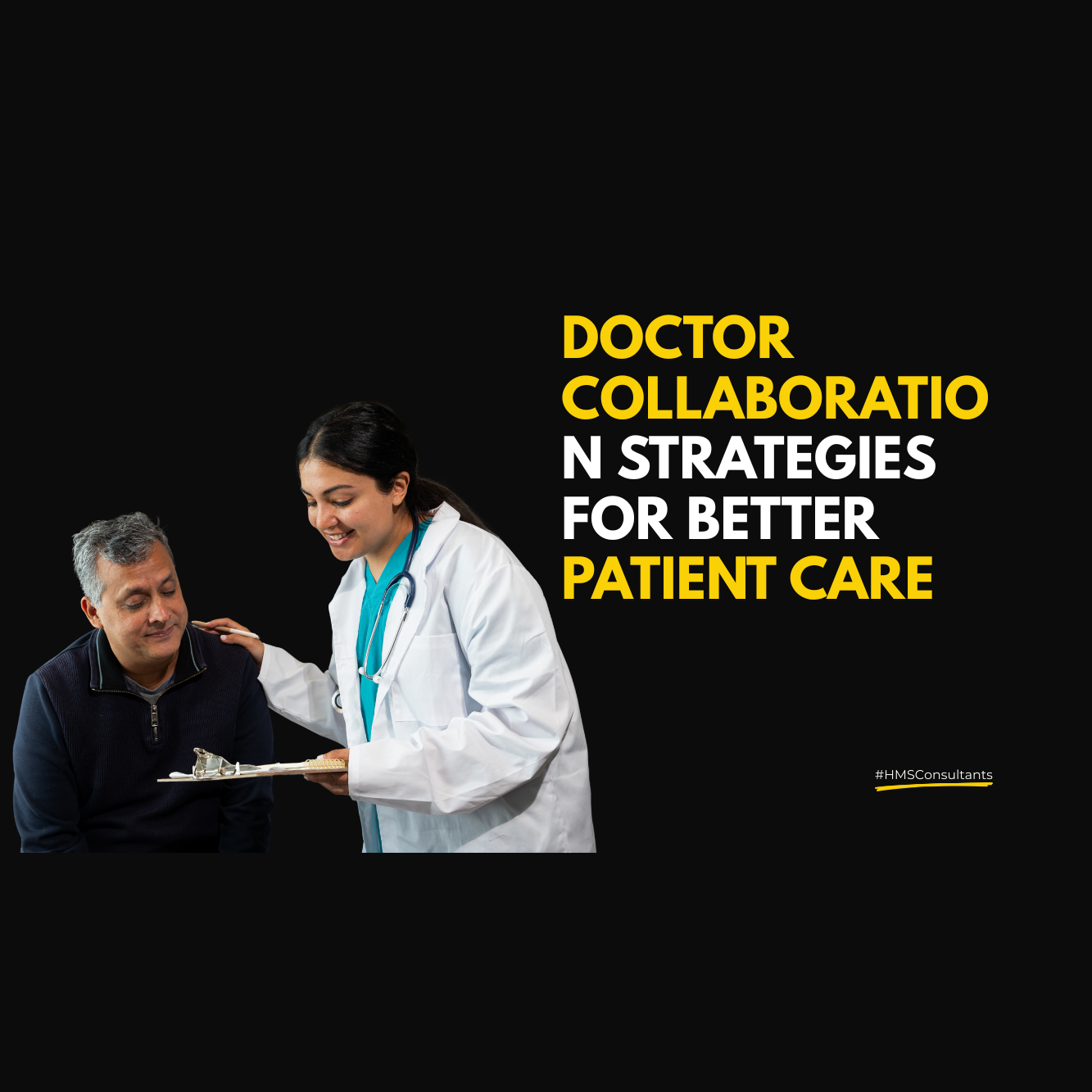
Doctor Collaboration Strategies for Better Patient Care
Building Trust-Based, Patient-Centric Networks for Better Outcomes
In today’s dynamic healthcare ecosystem, especially in India’s rapidly evolving tier 2 and tier 3 cities, patients are no longer satisfied with fragmented care. They seek continuity, coordination, and compassion. And the cornerstone of achieving this lies in doctor-to-doctor collaboration.
Whether you’re a general physician referring to a specialist, or a specialist requiring multi-disciplinary intervention, how you collaborate with your peers directly impacts patient outcomes, trust, and your professional reputation.
This blog outlines the strategic steps a doctor should follow to collaborate effectively with other doctors, for the patient’s benefit and their own sustainable growth.
Why Doctor Collaboration Matters More Than Ever
- Rise of multi-morbidity: More patients today suffer from chronic conditions like diabetes, hypertension, and arthritis, requiring multi-specialty input.
- Informed patients: Modern patients cross-check diagnoses and often seek second opinions.
- Medical reputation is network-driven: Referrals now account for a significant share of new patients, especially in close-knit communities.
- Tier 2/3 city ecosystem: These areas thrive on trust, community, and shared reputation, making collaborative care a key success strategy.
I. Build a Trusted Referral Network: Start With Relationship, Not Just Results
“Don’t just wait to be referred. Earn it.”
- Identify Complementary Specialties: If you’re a general physician, find specialists who have a strong track record with common patient needs, like diabetologists, orthopedists, gynecologists, and pediatricians.
- Meet Them Personally: Arrange brief one-on-one meetings over coffee or at medical events. Discuss clinical alignment and values.
- Collaborate on Difficult Cases: Jointly manage complex patients and document outcomes (while maintaining confidentiality).
- Trust Is Currency: In a community-based healthcare system, trust travels faster than technology. Be honest, humble, and clinically competent.
II. Communicate Clearly, Consistently & Compassionately
- Use Secure Communication Channels: WhatsApp is popular but not ideal for clinical data. Consider secure EHR platforms or encrypted messaging apps.
- Write Structured Referral Notes: Include your observations, differential diagnosis, treatment given, and what you expect from the specialist.
- Send Follow-Up Reports: When a patient returns after seeing the referred doctor, update the other doctor on the progress.
Avoid the Blame Game: Never criticize or undermine another doctor in front of the patient. Respect builds respect.
III. Create a Feedback Loop Between Referring & Referred Doctor
“Information flow must be two-way, not one-way.”
- Share clinical feedback, not just patient status.
- Discuss follow-up needs and shared accountability.
- If there are differing clinical opinions, resolve them respectfully in private communication.
This fosters long-term mutual respect and professional growth
IV. Make the Patient Feel Cared for, Not Tossed Around
- Introduce the referred doctor to the patient before sending them.
- Guide the patient’s expectations: what the referral is for, what tests might be done, etc.
- Coordinate appointments if possible.
- Ask for the patient’s feedback after referral.
A seamless handover makes the patient feel important and respected, not like a case being passed on.
V. Collaborate in Group Practice or Co-branded Models
In HMS’s experience working with multiple individual doctors and clinics, one key trend has emerged: multi-doctor setups outperform single-specialty clinics in trust, reviews, and growth.
- Co-locate your practice with another doctor to share resources and cross-refer patients.
- Run joint OPDs for complex chronic diseases.
- Launch co-branded campaigns on child health, women’s wellness, or geriatric care.
VI. Document and Measure Collaborative Success
If you’ve referred 10 patients last month, how many came back?
If another doctor referred patients to you, how many reported good outcomes?
Keep records. Run numbers. Refine.
Even in tier-2 towns, patients are becoming data-aware. The more intentional and transparent you are with your referrals, the more you’ll grow.
VII. Know That Your Results Affect Their Reputation
A doctor who refers patients to you is putting their own professional credibility on the line. Respect that trust.
- Prioritize referred patients.
- Communicate proactively with the referring doctor.
- Deliver excellent care with empathy and follow-through.
This not only sustains but multiplies your referral network over time.
VIII. Formalize a Patient Referral Program
To go from passive referrals to structured collaboration, develop a referral program that includes:
- Clear referral guidelines
- Regular case discussions
- Referral slips or digital forms
- Performance tracking
- Feedback collection from patients and referring doctors
IX. Promote Collaborative Success in Your Online Presence
Don’t hesitate to:
- Share success stories (with patient consent) of co-managed cases
- Highlight your specialist network on your website
- List your collaborating doctors on your Google Business Profile
- Co-author articles or social media posts on health awareness
This improves SEO, boosts patient trust, and reflects your commitment to holistic care.
X. Keep Learning, Keep Expanding
Attend joint CMEs, conferences, and inter-specialty workshops.
Collaboration is not a one-time tactic, it’s a continuous mindset of growth.
Final Thoughts : A Strong Medical Network Is the Doctor’s Lifeline
“If you want to go fast, go alone. If you want to go far, go together.”
In the Indian healthcare landscape, especially in growing towns and cities, a doctor’s network is not optional, it is existential.
Collaboration creates a ripple effect: better care, higher trust, more referrals, and ultimately, sustained growth for your clinic.
When doctors collaborate, everyone wins, especially the patient.
Written by Dr. Omang Gupta
is something we strongly believe in, which means ‘Knowledge without application is the same as having no knowledge at all
Akhil Dave
Principle Consultant
Ready to take your Personal Brand to the next level?
Share your details below and we will connect with you to discuss your growth strategy.
Healthcare Digital Marketing Is Not About Social Media
Healthcare digital marketing is no longer only about social media visibility. This blog explains how trust, reputation, content authority, reviews,…
Most Hospitals Still Misunderstand Medical Marketing
Medical marketing is often misunderstood as advertising alone. This blog explains why hospitals struggle with patient growth despite heavy spending…
Why Most Hospital Marketing Looks Exactly the Same
Most hospital marketing today looks almost identical because hospitals often use the same messaging, branding styles, and healthcare communication patterns….

Marketing a Clinic Is Different From Marketing a Hospital
Marketing a clinic requires a different strategy from hospital marketing because patients evaluate clinics more personally. This blog explains how…

Marketing Ideas for Hospitals That Target the 3AM Patient
Marketing ideas for hospitals in 2026 must go beyond daytime advertising and focus on how patients make late-night healthcare decisions….
Marketing a Hospital in 2026: The Rise of Zero-Click Patient Decisions
Marketing a hospital in 2026 is shifting beyond websites as patients make zero-click decisions through Maps, reviews, AI search, and…