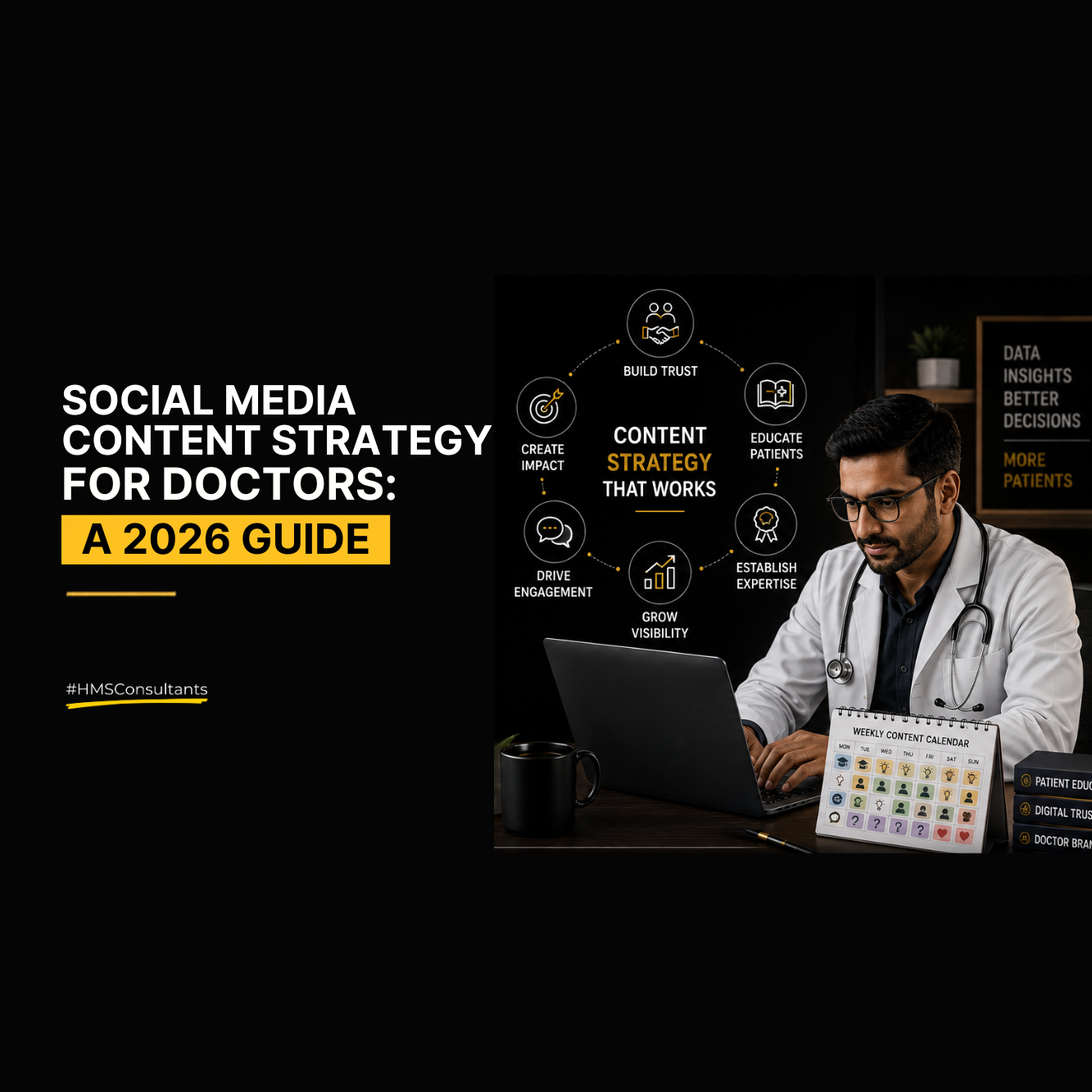


Social Media Content Strategy for Doctors: A 2026 Guide
A social media content strategy for doctors is a deliberate plan content pillars, a realistic posting cadence, and platform choice built to earn patient trust, not just followers. Most doctors post reactively with no underlying plan, which is why inconsistent, low-trust presences are still the norm.
1. What Is a Social Media Content Strategy for Doctors?
A social media content strategy is the plan behind what a doctor posts, how often, and why as opposed to posting whenever there’s spare time with no consistent theme. It sits alongside personal branding as a related but distinct discipline: personal branding is the overall identity and positioning (see our 2026 personal branding playbook), while content strategy is the operational plan for executing it week to week.
2. Why Trust Is the Real Metric, Not Followers
A doctor with 2,000 highly engaged followers who comment, ask questions, and eventually book appointments is more valuable than one with 20,000 passive followers who never interact. Follower count is easy to track and easy to over-index on; trust measured through engagement, DMs, and enquiries is what actually converts into patients. Every decision in this strategy should be evaluated against trust-building, not vanity metrics.
3. Building the Strategy: Content Pillars & Planning
Start with 3–4 content pillars recurring themes the doctor’s content will consistently revolve around, so the presence feels coherent rather than random. Common pillars for doctors:
– Patient education (explaining conditions, procedures, or treatment options in plain language)
– Myth-busting (correcting common misconceptions specific to the doctor’s specialty)
– Behind-the-scenes (a credible, human glimpse into daily practice, respecting patient privacy)
– Q&A (answering real questions patients commonly ask, either solicited or observed)
Once pillars are set, planning becomes simpler: every piece of content maps to one of the four, keeping the presence recognizable over time.
4. Content Ideas by Format
– Short video – a 60-second explainer answering one common patient question
– Carousel post – a step-by-step breakdown of a procedure or condition, one point per slide
– Text post – a personal perspective or a myth-busting statement with brief explanation
– Story/reel – quick behind-the-scenes moments, low production effort, high authenticity
5. A Sample Weekly Content Calendar
– Monday – Myth-busting post (text or carousel)
– Wednesday – Short video answering a patient FAQ
– Friday – Personal perspective or behind-the-scenes post
This is a starting cadence, not a rule the important part is picking a rhythm and sticking to it long enough to build recognizable consistency, rather than reinventing the plan every few weeks.
6. Platform-Specific Tactics
– Instagram – lead with visual/video content; use Stories for quick, low-effort engagement between main posts
– LinkedIn – lean toward professional insight and case-based learnings, useful for reaching referring doctors as well as patients
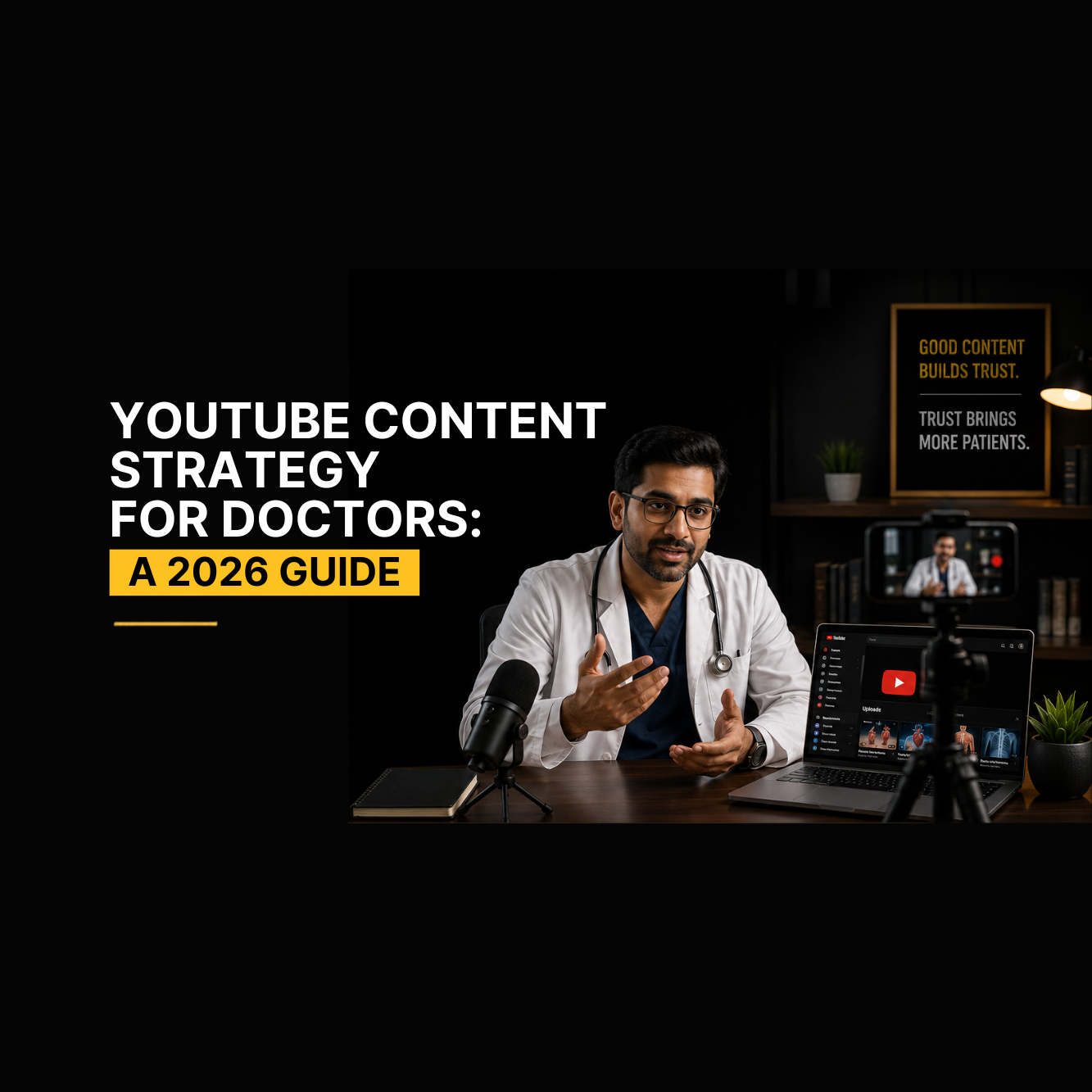
– YouTube – best suited to longer-form Q&A or explainer content that builds deeper trust than short-form alone
For the fuller platform-fit discussion, see our hospital social media marketing audit guide, which covers how to evaluate whether current platform choices match the actual target audience.
7. Measuring Trust & Visibility
Track a small, consistent set of metrics monthly:
– Engagement rate (comments and shares relative to reach, not just likes)
– Direct enquiries or DMs referencing specific content
– Social referral traffic to the website, tracked in GA4
– Comment sentiment are people asking genuine follow-up questions, or just passively liking?
8. How HMS Consultants Builds Social Content Strategies for Doctors
HMS Consultants builds content pillars and a realistic posting calendar around each doctor’s actual schedule and specialty, then ties performance back to real enquiry data so the strategy is judged by trust and patient interest generated, not follower growth alone.
Frequently Asked Questions
Content should focus on building trust through patient education, myth-busting, and genuine personal perspective not follower count or generic health tips copied from elsewhere.
Two to three posts a week, created consistently, works better than daily posting that isn’t sustainable. A realistic, repeatable cadence beats an ambitious one that gets abandoned after a month.
Content that shows genuine expertise and personality answering real patient questions, explaining reasoning behind a treatment approach, or sharing a personal perspective builds more trust than polished but generic health tips.
Either can work. What matters most is that the content reflects the doctor’s actual voice and expertise a professionally produced but generic-sounding post builds less trust than a simpler, authentic one.
Track engagement rate, direct enquiries referencing specific posts, and social referral traffic in GA4 follower count alone doesn’t indicate whether the content is building trust or generating patient interest.
is something we strongly believe in, which means ‘Knowledge without application is the same as having no knowledge at all
Akhil Dave
Principle Consultant
Ready to take your Personal Brand to the next level?
Share your details below and we will connect with you to discuss your growth strategy.
Healthcare Consultant Positions: Roles, Skills, Career Scope, and Opportunities in India
Explore Healthcare Consultant Positions in India, including key roles, essential skills, responsibilities, career opportunities, and practical insights to build a successful career in healthcare consulting.
Why Hospital Branding Matters More Than Ever in 2025
Hospital branding in 2025 demands more than just a logo it requires trust, digital presence, patient storytelling, and compliance with NMC & data laws.
How to Choose the Best Healthcare Marketing Agency in 2025
Not all marketing agencies are built for healthcare. Learn how to choose one that aligns with trust, compliance, and patient growth in 2025.
Why Hospital Marketing Without Patient Journey Mapping Is Bound to Fail
Hospital marketing often looks active but delivers fragile results. The real problem isn’t execution, it’s ignoring how patients decide. Without patient journey mapping, marketing loses direction and trust.
Why Hospital Marketing Strategy Fails When It Starts With Channels Instead of Decisions
Hospital marketing strategy fails when channels are chosen before patient decisions are understood. Growth improves when strategy reduces decision friction, not just increases visibility.
The Future of Healthcare in India: AI, Telehealth & Digital Transformation 2025
India’s healthcare system is rapidly evolving. From AI-powered diagnosis to virtual consultations, explore the technologies shaping the future of care.