Tag: Healthcare Marketing

  • Cost-Effective Marketing Solutions for Healthcare Providers

    Cost-Effective Marketing Solutions for Healthcare Providers

    Digital Marketing, Healthcare Marketing, Social Media Marketing

    Cost-Effective Marketing Solutions for Healthcare Providers

    Written by
    Published on
    Share This

    Effective hospital marketing is essential for attracting and retaining patients in the competitive healthcare landscape. However, healthcare providers often face budget constraints that make investing in extensive marketing campaigns challenging. Fortunately, there are cost-effective marketing solutions that can help healthcare providers achieve their goals without breaking the bank. This blog explores some of these strategies, offering practical tips for implementation.

    Understanding the Importance of Cost-Effective Marketing

    Cost-effective marketing solutions are crucial for healthcare providers aiming to maximise their return on investment (ROI) while minimising expenses. By leveraging affordable marketing tactics, providers can enhance their visibility, engage with patients, and build a strong online presence. This approach ensures that marketing efforts are sustainable and impactful, even with limited resources.

    Leveraging Digital Marketing Strategies for Hospital Marketing

    1. Search Engine Optimization (SEO)
      SEO is a powerful tool for healthcare providers looking to increase their online visibility. By optimising your website content for relevant keywords such as “Best Doctor Near Me,” “Best Dentist in Gujarat,” and “Top rated hospital in Gujarat,” you can improve your search engine rankings. Focus on creating high-quality, informative content that addresses common patient questions and concerns. Additionally, ensure your website is mobile-friendly and loads quickly, as these factors contribute to better SEO performance.
    2. Content Marketing
      Content marketing involves creating and sharing valuable content to attract and engage your audience. Start a blog on your healthcare website and regularly publish articles, videos, and infographics about health tips, medical conditions, and preventive care. This helps educate your patients and positions your practice as an authority in the healthcare industry. Utilise long-tail keywords like “Knee Replacement cost in India” and “Hair Transplant surgery at minimum cost” to reach a targeted audience.
    3. Social Media Marketing
      Social media platforms such as Facebook, Instagram, YouTube and LinkedIn offer excellent opportunities for cost-effective marketing. Create and maintain active profiles on these platforms to connect with your patients, share valuable content, and promote your services. Engage with your audience by responding to comments, hosting live Q&A sessions, and sharing patient testimonials. Social media advertising is also a cost-effective way to reach a broader audience, as you can set specific budgets and target demographics.

    Utilising Local SEO and Listings

    1. Google My Business
      Optimising your Google My Business (GMB) profile is a simple yet effective way to enhance your local SEO. Ensure that your GMB profile includes accurate information about your practice, such as your address, phone number, and office hours. Encourage satisfied patients to leave positive reviews, as this can improve your local search rankings and attract more patients to your practice.
    2. Local Directories
      List your practice in local and healthcare-specific directories such as Justdial, Practo, and Sulekha. Consistent NAP (Name, Address, Phone number) information across these platforms can boost your local SEO efforts and make it easier for patients to find your services.

    Email Marketing

    Email marketing remains one of the most cost-effective ways to maintain patient communication. Build an email list by encouraging patients to subscribe during visits or through your website. Send regular newsletters, health tips, appointment reminders, and updates about your services. Personalise your emails to make them more engaging and relevant to your audience.

    WhatsApp Business Messaging Solutions

    1. Patient Engagement and Reminders
      Utilise WhatsApp Business to enhance patient engagement and streamline communication. Send appointment reminders, follow-up messages, and informative content about various stages of treatment. This ensures patients are well-informed and engaged throughout their healthcare journey.
    2. WhatsApp Status Utilization
      Encourage hospital employees to share updates, health tips, and hospital events using WhatsApp Status. Employees are the hospital’s real brand ambassadors, and their active participation can help build a positive image and increase community engagement..

    Partnering with Local Businesses and Community Events

    Collaborate with local businesses and participate in community events to increase visibility and build community relationships. For example, you can sponsor health fairs, free health screenings, or educational workshops in association with local NGOs, Samaj, and community groups like “Agrawal Samaj,” “Muslim Samaj,” “Jain Samaj,” etc. These activities promote your services and establish your practice as a trusted and active community member.

    Monitoring and Measuring Success

    To ensure the effectiveness of your cost-effective marketing strategies, it’s essential to monitor and measure your results. Use tools like Google Analytics to track website traffic, social media insights to evaluate engagement, and email marketing software to analyse open and click-through rates. Regularly review your performance metrics and adjust your strategies based on the data to improve your marketing efforts continuously.

    Conclusion

    Cost-effective marketing solutions are within reach for healthcare providers willing to invest time and effort into strategic planning and execution. By leveraging digital marketing strategies, optimising local SEO, utilising email marketing, engaging with the community, and using WhatsApp Business solutions, healthcare providers can effectively promote their services without exceeding their budget. Remember, the key to successful marketing lies in consistency, engagement, and a commitment to providing valuable content to your patients.

    Insights by

    Vaishnavi Gandhi, Associate Consultant (Management Trainee)

    “Knowing is Knowing, Doing is Doing”

    is something we strongly believe in, which means ‘Knowledge without application is the same as having no knowledge at all

    Akhil Dave

    Principle Consultant

    Ready to take your healthcare marketing to the next level?

    Fill out the form below, and our consultant will contact you for a detailed, personalised consultation.

    • Why Market Research is Crucial for Healthcare Marketing

      Why Market Research is Crucial for Healthcare Marketing

      Business I Digital Marketing I Healthcare Marketing I Healthcare Marketing Strategy I Market Research I Online Reputation in Healthcare

      Why Market Research is Crucial for Healthcare Marketing

      Written by
      Published on
      Share This

      Effective marketing strategies are essential for attracting and retaining patients in the dynamic and ever-evolving healthcare field. Market research is fundamental to successful healthcare marketing, providing valuable insights into patient needs, preferences, and behaviours. This blog will explore the importance of market research in healthcare marketing, highlighting its role in developing targeted strategies, enhancing patient engagement, and improving overall marketing effectiveness.

      Understanding Market Research in Healthcare

      Market research involves systematically collecting, analysing, and interpreting data related to the healthcare market. It encompasses various methodologies, including surveys, focus groups, interviews, and data analytics, to gather information about patient demographics, market trends, competitive landscape, and patient satisfaction.

      Key Benefits of Market Research in Healthcare Marketing

      Informed Decision-Making

      • Data-Driven Insights: Market research provides data-driven insights that help healthcare providers make informed decisions about their marketing strategies. By understanding patient needs and preferences, providers can tailor their services and marketing efforts to meet those needs better.
      • Strategic Planning: Comprehensive market research enables healthcare providers to develop strategic marketing plans that align with market trends and patient expectations. This helps set realistic goals and objectives, ensuring that marketing efforts are effective and focused.

      Identifying Patient Needs and Preferences

      • Patient Demographics: Market research helps identify the demographics of the target audience, including age, gender, income levels, and geographic location. This information is crucial for developing targeted marketing campaigns that resonate with specific patient groups.
      • Patient Preferences: Understanding patient preferences regarding communication channels, service delivery, and healthcare providers allows for creating personalised marketing messages and improved patient experiences.

      Enhancing Patient Engagement

      • Tailored Communication: By understanding how patients prefer to receive information, healthcare providers can tailor their communication strategies to engage patients more effectively. This includes using preferred channels such as email, social media, or direct mail.
      • Content Relevance: Market research helps create relevant and engaging content that addresses patients’ specific concerns and interests. This improves patient engagement and fosters a stronger connection between patients and healthcare providers.

      Competitive Analysis

      • Identifying Competitors: Market research involves analysing the competitive landscape to identify key competitors and understand their strengths and weaknesses. This information is valuable for developing strategies to differentiate a healthcare practice from its competitors.
      • Benchmarking: By comparing performance metrics with competitors, healthcare providers can identify areas for improvement and develop strategies to achieve a competitive advantage.

      Improving Healthcare Marketing ROI

      • Resource Allocation: Market research helps identify the most effective marketing channels and tactics, ensuring that resources are allocated efficiently. This leads to better marketing budget utilisation and improved return on investment (ROI).
      • Performance Measurement: Regularly conducting market research allows healthcare providers to measure the effectiveness of their marketing campaigns and make data-driven adjustments to optimise performance.

      Identifying Market Opportunities

      • Emerging Trends: Market research informs healthcare providers about emerging trends and opportunities in the healthcare industry. This includes new technologies, treatment options, and patient care models that can be leveraged to attract and retain patients.
      • Unmet Needs: By identifying unmet needs in the market, healthcare providers can develop new services or improve existing ones to serve their patients better and gain a competitive edge.

      The Role of Healthcare Marketing Consultants

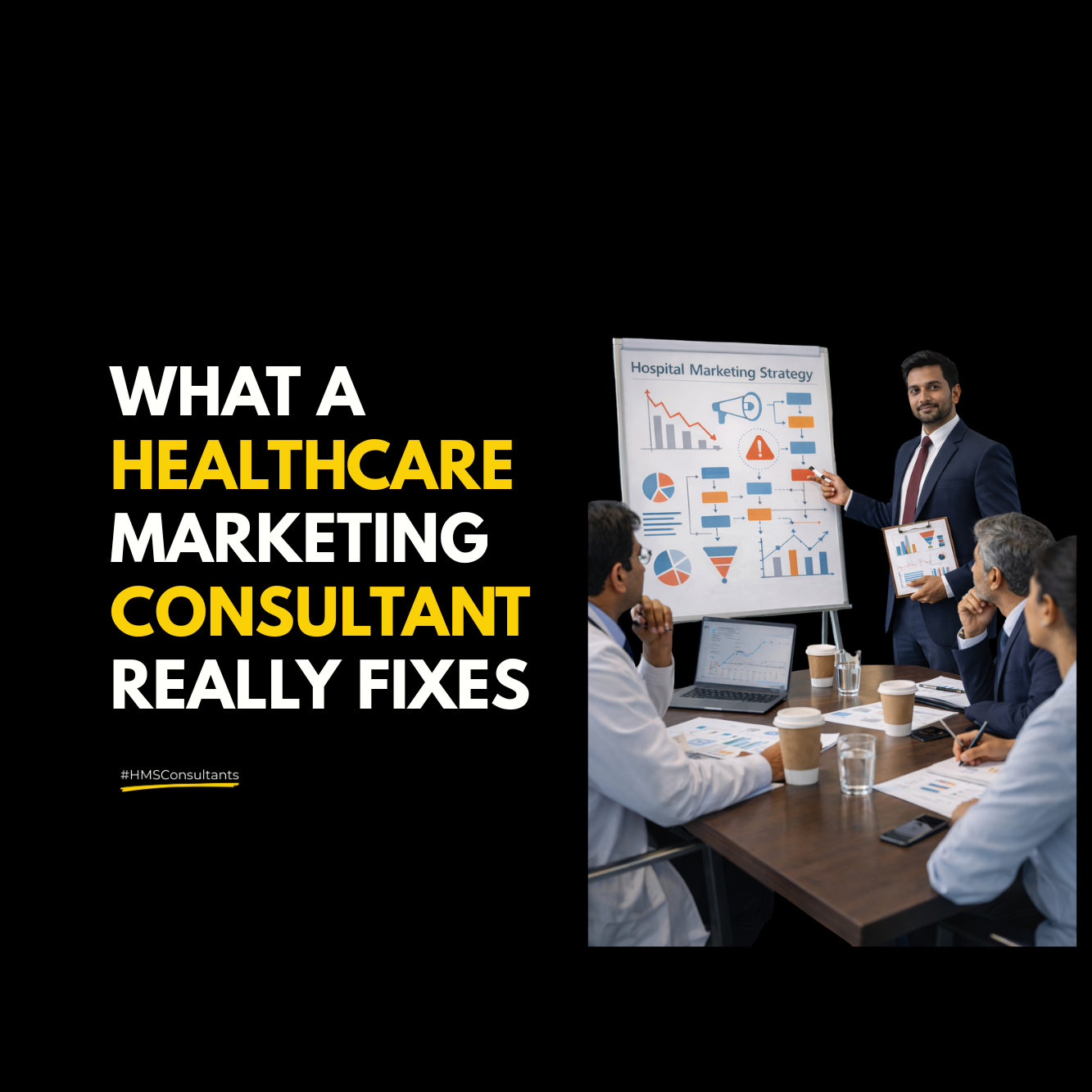
      Healthcare marketing consultants are vital in conducting market research and translating insights into actionable strategies. They bring data collection and analysis expertise, helping healthcare providers understand market dynamics and develop effective marketing plans. Collaborating with a marketing consultant ensures that healthcare providers stay ahead of industry trends and make informed decisions that drive growth and patient satisfaction.

      Conclusion

      Market research is a crucial element of effective healthcare marketing. Market research enables healthcare providers to develop targeted marketing strategies, enhance patient engagement, and improve marketing ROI by providing valuable insights into patient needs, preferences, and behaviours. Regularly conducting market research ensures that healthcare organisations stay responsive to market changes and continuously improve their services. Partnering with a healthcare marketing consultant can further enhance these efforts, ensuring the success of marketing initiatives and the overall growth of the healthcare practice.

      Insights by

      Sourabh Sharma, Associate Consultant (Management Trainee)

      “Knowing is Knowing, Doing is Doing”

      is something we strongly believe in, which means ‘Knowledge without application is the same as having no knowledge at all

      Akhil Dave

      Principle Consultant

      Ready to take your healthcare marketing to the next level?

      Fill out the form below, and our consultant will contact you for a detailed, personalised consultation.

      • The Role of Online Reputation Management in Healthcare

        The Role of Online Reputation Management in Healthcare

        The Role of Online Reputation Management in Healthcare

        Written by
        Published on
        Share This

        In today’s digital age, healthcare providers’ reputations can be significantly influenced by their online presence. Online reputation management (ORM) has become a critical aspect of healthcare marketing for doctors and hospitals, as it helps build trust, attract new patients, and retain existing ones. This blog explores the importance of ORM in healthcare, the strategies to manage online reputation effectively, and the benefits it brings to healthcare providers.

        Understanding Online Reputation Management in Healthcare

        Online reputation management involves monitoring, influencing, and controlling an individual’s or organisation’s online presence. In healthcare, ORM focuses on managing patient reviews on Google, social media interactions, and other digital content to ensure a positive perception of healthcare providers. Effective ORM strategies help healthcare organizations maintain a strong and positive online reputation, essential for attracting and retaining patients.

        Social Media Marketing

        Social media is an essential tool in the overall marketing strategy. Platforms like Facebook, Instagram, YouTube and LinkedIn allow healthcare providers to connect with patients, share valuable content, and promote their services. However, it’s crucial to rely on something other than social media. A balanced approach with other digital marketing techniques is vital for sustained success.

        Importance of Online Reputation Management in Healthcare

        1. Building Trust and Credibility
          Patients often rely on online reviews and ratings to choose healthcare providers. A positive online reputation builds trust and credibility, making it more likely for potential patients to choose a particular provider.
        2. Attracting New Patients
          A strong online reputation can attract new patients searching for reliable healthcare services. Positive reviews and high ratings can influence their decision-making process.
        3. Retaining Existing Patients
          Satisfied patients are more likely to leave positive reviews and recommend the healthcare provider to others. This helps retain existing patients and brings in new ones through word-of-mouth referrals.
        4. Handling Negative Feedback
          Effective ORM strategies allow healthcare providers to address negative feedback promptly and professionally. This shows patients that their concerns are taken seriously and can help turn a negative experience into a positive one.

        Key Strategies for Effective Online Reputation Management

        1. Monitor Online Presence
          Regularly monitor online Google reviews, ratings, and social media mentions to stay informed about what patients say. Tools like Google Alerts, Social Mention, and specialised ORM software can help track online mentions.
        2. Encourage Patient Reviews
          Encourage satisfied patients to leave positive reviews on platforms like Google, Yelp, and Healthgrades. Providing excellent service and asking for feedback can increase the number of positive reviews.
        3. Respond to Reviews
          Respond promptly and professionally to both positive and negative reviews. Thank patients for their feedback, address their concerns, and offer solutions when necessary. This shows that the provider values patients’ opinions and is committed to improving their experience.
        4. Engage on Social Media
          Actively engage with patients on social media platforms like Facebook, Twitter, and Instagram. Share informative content, respond to comments and messages, and participate in conversations to build a positive online presence.
        5. Create High-Quality Content
          Publish high-quality, informative content on your website and social media channels. This can include blog posts, articles, videos, and infographics that address common patient questions and concerns. High-quality content can improve search engine rankings and attract more visitors to your site.

        6. Optimise for SEO
          Optimize your website and online profiles for search engines to ensure they appear in relevant search results. Use high-volume keywords related to healthcare services, patient care, and online reputation management to improve visibility.

        Benefits of Effective Online Reputation Management

        1. Increased Patient Trust
          A positive online reputation builds trust and confidence in healthcare providers, increasing patient loyalty and satisfaction.


        2. Higher Patient Acquisition
          A strong online presence attracts more patients, as positive reviews and high ratings influence their decision-making process.


        3. Improved Patient Retention
          Satisfied patients are more likely to return for future services and recommend the provider to others, leading to higher patient retention rates.


        4. Enhanced Brand Image
          Effective ORM strategies enhance healthcare providers’ overall brand image, making them stand out in a competitive market.


        5. Better Search Engine Rankings
          High-quality content and positive reviews improve search engine rankings, making it easier for potential patients to find and choose healthcare providers.

        Conclusion

        Online reputation management is a crucial component of healthcare marketing. By actively managing their online presence, healthcare providers can build trust, attract new patients, and retain existing ones. Implementing effective ORM strategies, such as monitoring online reviews, engaging on social media, and optimising for SEO, can significantly enhance the reputation and success of healthcare organisations. In the digital age, a strong online reputation is essential for delivering exceptional patient experiences and achieving long-term success.


        Digital Marketing,Digital Marketing For Doctors,Doctors Digital Marketing,Healthcare Marketing,Healthcare Marketing Strategy,Online Reputation in Healthcare

        “Knowing is Knowing, Doing is Doing”

        is something we strongly believe in, which means ‘Knowledge without application is the same as having no knowledge at all

        Akhil Dave

        Principle Consultant

        Ready to take your healthcare marketing to the next level?

        Fill out the form below, and our consultant will contact you for a detailed, personalised consultation.

        • How Digital Marketing for Healthcare Can Increase Your Patient Count

          How Digital Marketing for Healthcare Can Increase Your Patient Count

          Digital Marketing, Healthcare Marketing, Social Media Marketing

          How Digital Marketing for Healthcare Can Increase Your Patient Count

          Written by
          Published on
          Share This

          In today’s competitive healthcare landscape, digital marketing has become essential for attracting new patients and retaining existing ones. A well-executed digital marketing strategy can enhance patient engagement, improve online reputation, and significantly increase patient count. This blog explores the importance of digital marketing in healthcare and provides practical tips to leverage it effectively.

          Importance of Digital Marketing in Healthcare

          Digital marketing for healthcare involves using online channels to reach and engage with patients. It includes strategies such as SEO (Search Engine Optimization), SEM (Search Engine Marketing), and social media marketing. These techniques help healthcare providers increase online visibility, connect with patients, and build trust.

          SEO and SEM

          SEO helps healthcare websites rank higher in search engine results, making it easier for patients to find your services. SEM involves paid search campaigns that target specific keywords related to your services, ensuring your ads appear at the top of search results. Together, these strategies can drive more traffic to your website and increase patient inquiries.

          Social Media Marketing

          Social media is an essential tool in the overall marketing strategy. Platforms like Facebook, Instagram, YouTube and LinkedIn allow healthcare providers to connect with patients, share valuable content, and promote their services. However, it’s crucial to rely on something other than social media. A balanced approach with other digital marketing techniques is vital for sustained success.

          Key Elements of an Effective Digital Marketing Strategy

          1. Understanding Your Target Audience: To develop a perfect digital marketing strategy, it’s very important to understand your target audience, segment them appropriately, and consider the local dialect. This helps create digital or social media content that resonates with potential patients and addresses their needs.

          2. Social Media Platform-Specific Content: Digital marketing can be highly effective when you develop platform-specific content. Each platform has its unique audience and content requirements, so tailoring your content to fit the platform ensures better engagement and authenticity.

          3. Website and Content Optimization: Your website is the cornerstone of your digital marketing efforts. Ensure it is user-friendly, mobile-optimized, and contains valuable content that answers patients’ questions. Regularly update it to keep it fresh and relevant.

          4. Periodic Audits and Analytics: It is essential to audit your digital assets regularly and analyse their performance. Use tools like Google Analytics and Google Search Console to track website traffic, user behaviour, and conversion rates. This helps you identify areas for improvement and refine your strategy.

          5. Understanding User Perspective: Generating content without understanding the user’s perspective on your services is futile. Engage with patients and target audiance to understand their needs and preferences. This will help you create relevant and valuable content.

          The Role of Marketing Consultants

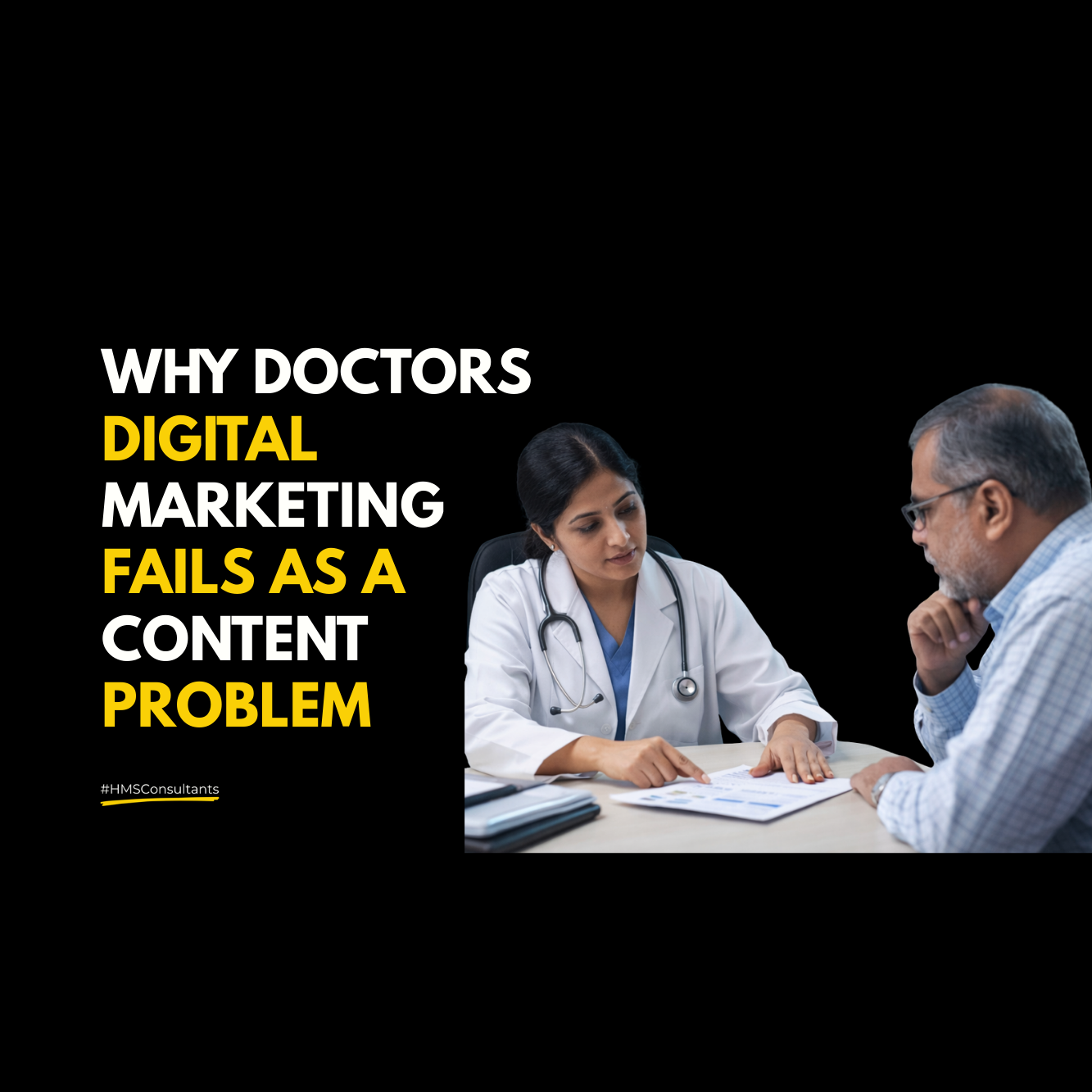
          Doctors are experts in their field, but digital marketing requires different skills and knowledge. It’s not everyone’s cup of tea. A marketing consultant who understands the healthcare industry and is up-to-date with digital marketing trends can change the game. They can help increase brand visibility, patient footfall, and attract the patients of your choice to your practice, Hospital or Clinic.

          Conclusion

          Digital marketing is a powerful tool that can significantly increase your patient count. You can enhance your online presence and attract more patients by implementing effective SEO and SEM strategies, engaging with patients on social media, optimising your website, and conducting regular audits. Working with a knowledgeable marketing consultant can provide the expertise needed to succeed in the ever-evolving digital landscape.

          Remember, “Knowing is Knowing, Doing is Doing.” Knowledge without implementation is same having no knowledge at all. By reading this blog, you must be knowledgeable about digital marketing strategies and not implementing them in your practice is.

          Insights by

          Akhil Dave, Principal Consultant – HMS Consultant

          “Knowing is Knowing, Doing is Doing”

          is something we strongly believe in, which means ‘Knowledge without application is the same as having no knowledge at all

          Akhil Dave

          Principle Consultant

          Ready to take your healthcare marketing to the next level?

          Fill out the form below, and our consultant will contact you for a detailed, personalised consultation.