The Science of Patient Trust: What Content Patients Actually Search For (Not What Hospitals Publish)
Patients don’t search for hospitals they search for clarity. Learn how trust-driven content...
They simply disappear.
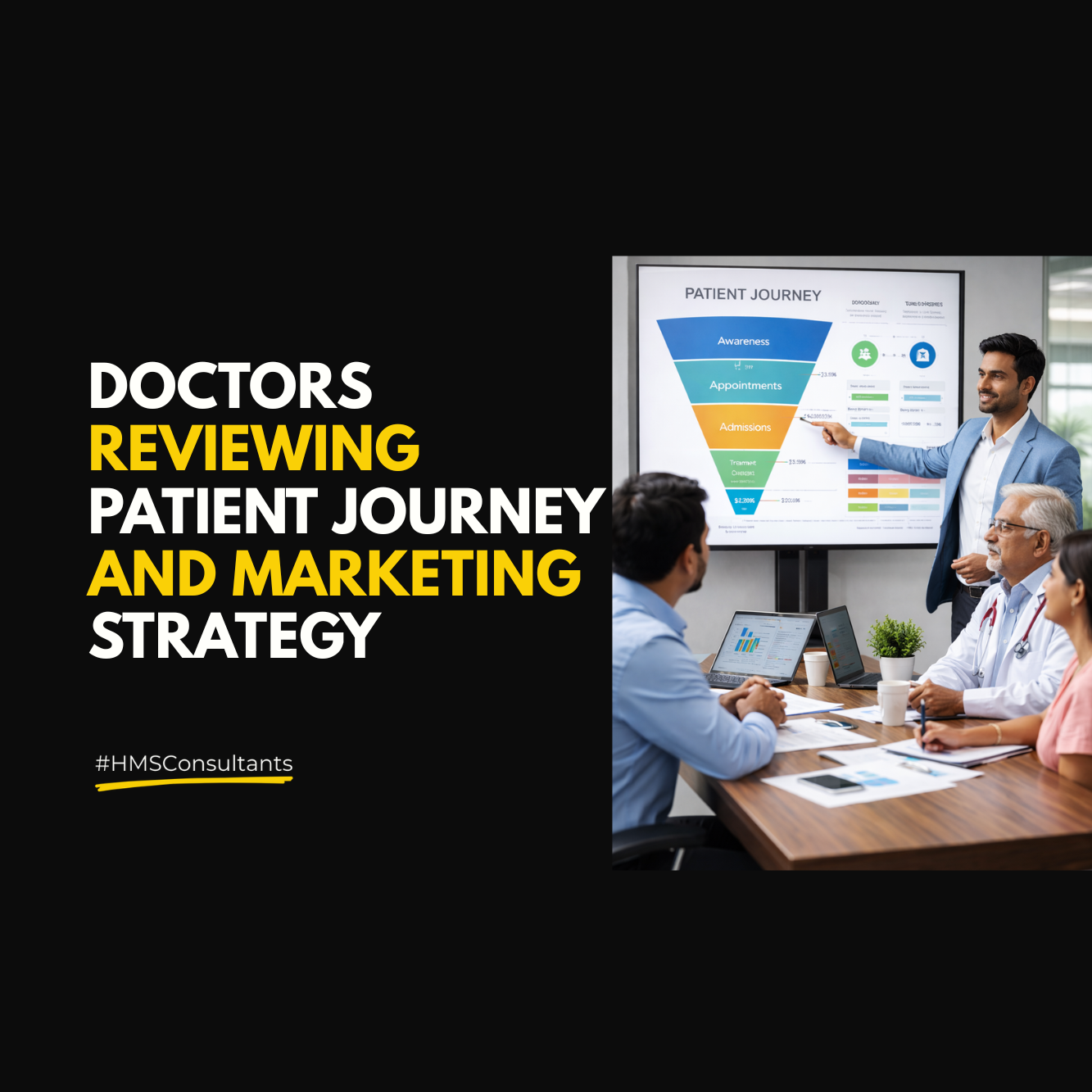
Most hospitals visualise their funnel like this:
Awareness → Enquiry → OPD → Treatment → Discharge
But the patient’s real funnel is far more complex:
Search → Compare → Doubt → Verify → Delay → Ask Someone → Re-check → Hesitate → Drop Off → Choose Another Option
The majority of drop-offs happen before the hospital even realises a patient was considering them.
Without visibility into this invisible funnel, hospitals keep fixing the wrong problems.
A patient searches for a hospital or doctor. They find your Google listing. They scroll. And then… they leave.
Why?
Common invisible triggers:
The patient doesn’t complain. They simply open the next listing. Hospitals rarely realise how many patients exit at this stage because this drop-off leaves no trace.
A patient clicks on your website. They are not looking for design. They are looking for reassurance.
Unanswered questions cause silent exits:
If the website talks about the hospital instead of to the patient, trust breaks quietly.
No feedback is given.
No form is filled.
The patient leaves.
Some patients do enquire by call or WhatsApp but still drop off.
Why?
The patient thinks:
“I’ll check somewhere else.”
They don’t argue.
They don’t say no.
They simply stop responding.
From the hospital’s side, it looks like “no conversion.”
From the patient’s side, it felt like lack of care.
Even when patients visit the hospital, drop-offs continue. Invisible exit points include:
Patients may complete the consultation, but mentally exit the relationship.
They don’t return.
They don’t refer.
They don’t follow up.
Hospitals often assume the visit was “successful” because OPD happened.
But trust was never fully built.
Many patients drop off after diagnosis. Not because they doubt the doctor but because:
Patients rarely say, “I am scared.”
They say, “I’ll think about it.”
And then they disappear.
Hospitals interpret this as price sensitivity or indecisiveness. In reality, it’s unresolved anxiety.
Even after treatment, invisible exits continue.
If discharge feels:
Patients leave without emotional closure. They may recover clinically, but they don’t build loyalty.
No repeat visits.
No referrals.
No positive advocacy.
This silent loss is rarely measured, but it directly impacts long-term growth.
Not emotions.
Not hesitation.
Not confusion.
Not fear.
Not trust gaps.
The invisible funnel exists between numbers and hospitals rarely look there.
Hospitals that grow sustainably do one thing differently: They track behaviour, not just outcomes.
They observe:
They ask:
This mindset transforms marketing, operations, and patient experience together.
Patients rarely complain.
They rarely confront.
They rarely explain.
They simply choose differently.
Hospitals that rely only on feedback forms and reviews see only the surface.
Hospitals that study the invisible funnel see the real story.
Growth does not come from adding more marketing. It comes from removing silent friction.
Every hospital loses patients.
The difference is who knows why.
If patients disappear without a trace, the system is broken not the patient.
When hospitals learn to see the invisible funnel:
The future of healthcare growth lies not in louder marketing but in listening to what patients never say.
Share your details below and we will connect with you to discuss your growth strategy.
Patients don’t search for hospitals they search for clarity. Learn how trust-driven content...
Hospitals don’t grow on ads alone. A well-designed referral marketing system turns patient...
Most hospital websites fail because patients leave unconvinced. Clear guidance, reassurance, and trust-building...
Patient experience is the hidden force behind hospital marketing performance. When experience and...
Most hospitals mistake marketing for promotion, focusing on ads and visibility. True hospital...
Most doctors struggle with personal branding because visibility ≠ trust. Learn how to...