


What a Hospital Marketing Expert Sees in the First 30 Days That Others Miss for Years
A hospital marketing expert can identify hidden friction in the patient journey within...
A family in Ahmedabad needs a pediatrician.
A couple in Jaipur wants a fertility specialist.
A senior citizen in Indore needs cataract surgery.
A parent in Kochi is desperately searching for an emergency hospital at midnight.
They all do the same thing: open Google.
Type → “Best pediatrician near me.”
Google shows:
Within 7 seconds, the decision begins. Patients do not compare degrees first. They compare ratings.
It sounds strange, but it’s true. Patients do not think like doctors.
They think like consumers.
A restaurant with 20 reviews feels new. A restaurant with 1000 reviews feels trusted.
Hospitals follow the same psychology.
Numbers matter.
Volume matters.
Consistency matters.
A doctor may have treated thousands, but if only five reviews exist online, patients assume otherwise.
A negative review is not the problem. A negative review without a response is.
When a patient reads criticism and sees the hospital defend, explain, apologise, or resolve with respect, they feel reassured.
When a hospital remains silent, patients think:
Online silence looks like guilt. Hospitals often forget that reviews are not only feedback, but also public conversations.
You can tell people you’re good. Your website can say you’re the best. Your brochures can say world-class.
But nothing is as powerful as a mother from your city writing:
“My child was treated with care, and the staff was very helpful.”
Or a senior citizen saying:
“The doctor explained everything patiently.”
Or a family saying:
“Emergency team responded immediately.”
These are not reviews. They are emotional proofs, and patients believe them deeply.
Worse, one angry review can go viral on WhatsApp, Telegram, and local groups.
People don’t share advertisements. They share experiences.
Hospitals spend lakhs on branding and lose patients because nobody replies to Google comments. A review is not a complaint. It’s an opportunity to show responsibility publicly.
Doctors measure outcomes. Administrators measure revenue. But patients measure:
These don’t show up in medical reports. They show up in reviews.
The review section is a mirror. Hospitals that read it grow, and the hospitals that ignore it repeat their mistakes.
A family searches for a hospital for a normal delivery. They find your hospital with:
3.6 rating
18 bad reviews about rude staff, billing confusion, long waiting, and unresponsive reception.
They don’t call.
They don’t visit.
They don’t enquire.
You never even know you lost them.
Hospitals say, “We are not getting patients.”
Sometimes they are getting them, just losing them online, silently.
Patients don’t expect perfection. They expect honesty.
A hospital with 300 reviews and a few bad ones looks normal. A hospital with only 5 perfect reviews looks suspicious.
When a hospital responds respectfully even to criticism patients feel safer.
“No one will shout at us.”
“No one will ignore us.”
“They take feedback seriously.”
Respect builds trust faster than publicity.
Large hospitals often ignore reviews because nobody is assigned to manage them.
Small clinics do the opposite:
Patients feel noticed. And when patients feel valued, they return, even if others are cheaper or offer more. Human connection beats infrastructure.
A happy patient is willing to write a review, but they will not do it without being asked.
A simple, polite request:
“Sir/Ma’am, if your experience was good, please leave a review. It helps others feel confident.”
This is not marketing. It is reputation building.
Most angry reviews are voluntary. Most good reviews need a reminder.
Ads cost money. Reviews cost nothing.
Ads reach strangers. Reviews convince them.
Ads tell your story. Reviews confirm it.
A hospital with 800 reviews does not need to prove credibility, the public has done it for them.
Hospitals often believe doctors are their biggest strength.
In treatment, they are. But before a patient chooses a doctor, they choose a hospital. And before they choose a hospital, they choose a Google listing.
A 30-second search can determine the next 10 years of patient loyalty.
Google reviews are no longer feedback.
They are digital referrals.
They are reputation.
They are marketing.
They are trust.
A hospital that actively collects reviews, responds respectfully, and learns from criticism will never struggle with patient confidence.
Because in today’s world, the most powerful diagnosis a patient makes happens before stepping into the OPD, it happens on Google.
Share your details below and we will connect with you to discuss your growth strategy.
A hospital marketing expert can identify hidden friction in the patient journey within...

Patients often decide which hospital to visit before their first consultation. Searches like...

Clinic marketing strategy guide for doctors explaining why OPD becomes inconsistent, why patients...

Hospital patient experience often breaks silently before complaints surface, weakening patient trust, referrals,...

Doctors digital marketing fails when it is treated as a content volume problem....
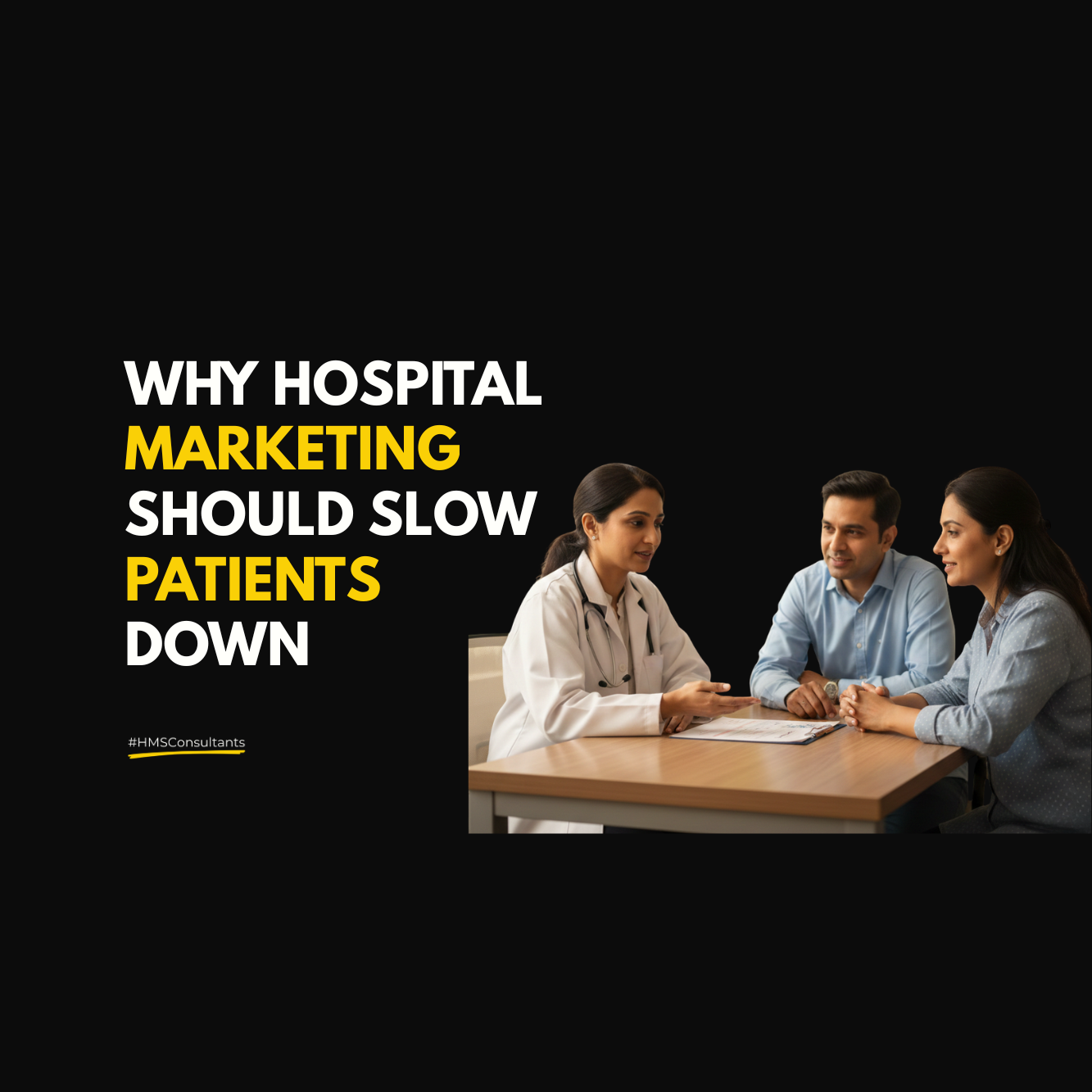
Marketing for hospitals works when patients feel guided, not rushed. Clear communication and...