

Hospital Digital Marketing Audit: The Complete 2026 Checklist
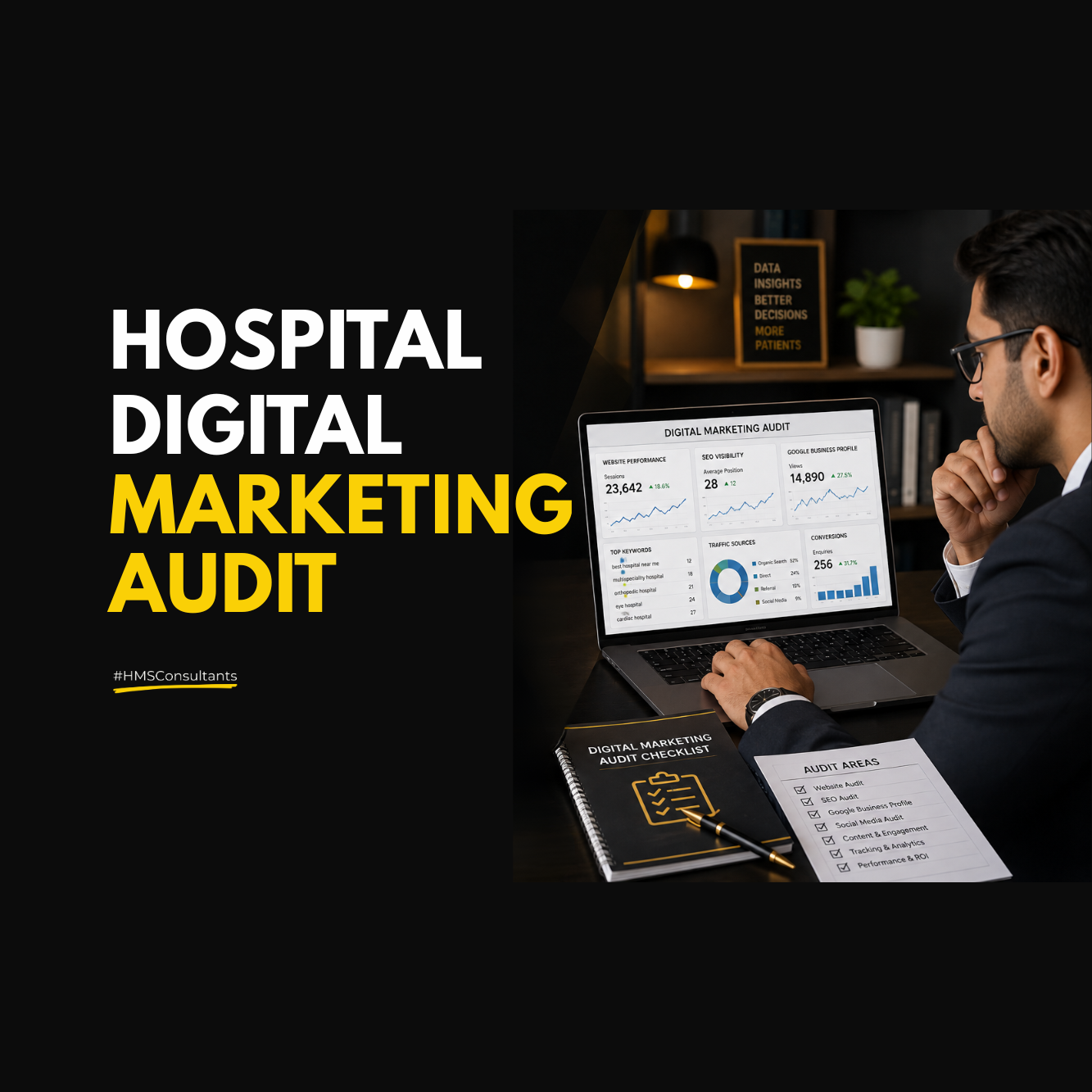
A hospital digital marketing audit is a focused review of every online channel a hospital uses to attract patients website performance, SEO rankings, Google Business Profile, paid campaigns, and whether any of it is actually being measured. Most hospitals invest in a website and a few campaigns but have never checked whether they’re working together or working at all.
1. What Is a Hospital Digital Marketing Audit?
A hospital digital marketing audit narrows in on everything measurable online: the website, search rankings, local listings, paid advertising if it exists, and the tracking infrastructure behind all of it. Where a full hospital marketing audit also looks at offline branding and team capability, a digital audit answers a more specific question is the hospital’s online presence actually generating enquiries, and can anyone prove it either way?
2. Why Digital Deserves Its Own Audit
Digital channels change faster than offline ones, and most hospital websites were built once and never revisited. A digital-specific audit matters because:
– Search engine algorithms and AI answer engines (ChatGPT, Google AI Overviews) now influence how patients find hospitals, and most sites haven’t adjusted for this
– Tools like Google Analytics and Search Console are often installed but never actually reviewed see our related guide on hospital marketing audits for the broader picture
– A hospital’s digital presence can look active (a website exists, a Facebook page posts occasionally) while quietly failing every measurable goal
3. What a Hospital Digital Marketing Audit Covers
– Website — speed, mobile experience, structure, and calls-to-action
– SEO — rankings for the hospital’s name, city, and key specialties
– Google Business Profile — accuracy, review volume, and update frequency
– Tracking — whether GA4 and Search Console are installed and whether anyone reviews them
– Paid campaigns — if running, whether spend is tied to a measurable outcome
– AI/answer-engine visibility — whether the hospital appears when patients ask ChatGPT or Google AI Overviews health-related local questions
– Technical schema — structured data (LocalBusiness, Service) that helps both search engines and AI tools understand the hospital correctly
Social media presence is reviewed separately in our dedicated hospital social media marketing audit guide, since it deserves its own depth of review.
4. The Hospital Digital Marketing Audit Checklist
Website
☐ Page load time under 3 seconds on mobile
☐ Mobile-friendly design (test on an actual phone, not just a browser resize)
☐ Every key page has a clear call-to-action
☐ Contact/appointment forms are tested end-to-end and actually deliver enquiries to someone
SEO
☐ Hospital ranks on page 1 for its own name
☐ Hospital ranks for “[specialty] in [city]” for at least its top 2–3 departments
☐ Meta titles and descriptions exist and are unique on every page
☐ LocalBusiness and Service schema markup is present
Google Business Profile
☐ Profile is claimed and verified
☐ Hours, address, and phone number are current
☐ At least one post or update in the last 30 days
☐ Review response rate is above 80%
Tracking & Reporting
☐ GA4 is installed and someone reviews it monthly
☐ Search Console is set up and checked for indexing errors
☐ Conversion events (form submissions, click-to-call) are actually configured, not just assumed
Paid & Emerging Channels
☐ If running paid ads, cost-per-enquiry is tracked, not just spend
☐ AI referral traffic (ChatGPT, Perplexity) is tracked as its own segment in GA4, not lumped into “other”
5. Common Digital Red Flags
– Google Analytics installed years ago, generating data nobody has looked at since
– A Google Business Profile with outdated hours or a phone number that’s no longer in service
– A website that ranks well for the hospital’s brand name but nowhere for the searches an actual new patient would use
– No difference in messaging or design between mobile and desktop, despite most searches happening on mobile
6. Tools Used in a Digital Marketing Audit
A credible digital audit draws from multiple data sources rather than one dashboard: Google Analytics (GA4) for behavior, Google Search Console for search performance, a rank-tracking tool (e.g. Ubersuggest) for keyword position history, and a manual review of the Google Business Profile and top 5–10 pages. Any audit relying on just one of these is incomplete.
7. How Often to Run a Digital Audit
A full digital audit annually, with a lighter monthly check on Google Business Profile activity, review response time, and whether analytics are still reporting correctly. Run one immediately after any website redesign or CMS migration, since these frequently break tracking without anyone noticing.
8. How HMS Consultants Conducts a Digital Marketing Audit
HMS Consultants pulls data directly from GA4, Search Console, and independent rank-tracking tools rather than relying on a single dashboard, and benchmarks findings against the hospital’s actual local competitors surfacing not just what’s broken, but what’s costing enquiries right now.
Frequently Asked Questions
A hospital digital marketing audit reviews the website, SEO rankings, Google Business Profile, paid campaigns if any, and whether conversions like appointment bookings and enquiries are being tracked at all.
A digital marketing audit only covers online channels. A full hospital marketing audit adds offline branding, referral relationships, and internal team capability on top of the digital review.
There’s no universal benchmark the right comparison is against similarly sized hospitals in the same city, which is exactly what a professional audit benchmarks against rather than a generic industry average.
It helps but isn’t mandatory if GA4 or Search Console isn’t already set up, that itself is one of the first gaps a digital marketing audit will flag and fix.
Yes, the checklist in this guide covers the basics any hospital administrator can self-assess. A professional audit adds competitive benchmarking and a prioritized fix list beyond what a self-check can surface.
is something we strongly believe in, which means ‘Knowledge without application is the same as having no knowledge at all
Akhil Dave
Principle Consultant
Ready to take your Personal Brand to the next level?
Share your details below and we will connect with you to discuss your growth strategy.
Time as Currency: Why Speed of Care is the New Marketing Advantage
Patients value time as much as treatment. Discover how faster consultations, quick reports, and responsive follow-ups can become a clinic’s strongest marketing advantage in India.
Hospital Marketing Ideas: Practical Ways to Improve Patient Reach
Hospital marketing ideas should help patients understand services, build trust, and connect with the right care. From doctor education videos and local SEO to patient FAQs and Google Business…
The Complete Clinic & Hospital Growth Guide for Doctors
Clinic marketing strategy guide for doctors explaining why OPD becomes inconsistent, why patients are not choosing your clinic, and what must be fixed before spending on marketing.
The 5 Pillars of Hospital Branding That Drive Patient Trust – Not Just Footfall
Hospital branding is what builds patient trust beyond ads and visibility. This blog explains the 5 pillars that strengthen reputation, improve patient experience, increase footfall, and create long-term hospital…
Market Feasibility Study for New Clinic India 2025 Guide
Discover how to conduct a market feasibility study for a new clinic in India in 2025—covering regulations, tech, patient demand, and strategy to launch a future-ready healthcare practice.
Engaging Gen Z: How Healthcare Businesses Can Capture the Next Generation’s Attention
Learn how healthcare businesses can capture the attention of Gen Z by embracing authenticity, personalization, sustainability, and inclusivity. This blog offers practical marketing strategies and insights tailored for healthcare…