
Demystifying Patient Journey Analytics for Indian Hospitals From First Click to Discharge

Written by
Published on
Share This

Why Hospitals Cannot Rely on Guesswork Anymore

The Indian healthcare sector is becoming more competitive every year. Patients have endless choices: multi-speciality hospitals, boutique clinics, online consultations, health-tech platforms, and home-care providers. Yet most hospitals in India still operate without understanding how patients discover them, why they choose them, and where they drop off in the journey.

This is why patient journey analytics is no longer a “nice-to-have”, it is the foundation of sustainable, efficient, ROI-driven healthcare marketing.

Patient Journey Analytics = Tracking every stage of the patient’s decision from awareness to enquiry to OPD to discharge to follow-up.

When hospitals understand these stages, they stop guessing and start making decisions backed by real patient behaviour.

1. The First Click: Where Does the Patient Journey Actually Begin?

Many hospitals assume the patient journey starts when someone calls the reception.

In reality, the journey starts much earlier often days or weeks before that phone call.

Common “first-click” entry points:

  • Google search (“best gynecologist near me”)
  • Google Maps discovery
  • Facebook or Instagram reels
  • YouTube doctor explanations
  • Patient reviews
  • Family referrals who still Google you to confirm
  • Website visit
  • Online articles
  • Health insurance search
  • WhatsApp forwards

Modern patients behave like informed consumers.
They compare, research, verify and then decide.

Hospitals that track these early discovery touchpoints can understand which channels bring the highest-quality patients.

2. Awareness → Consideration: What Makes Patients Shortlist One Hospital Over Another?

After the first click, patients move into the consideration phase, where they evaluate credibility.

They look for:

  • Website quality
  • Consistent branding
  • Doctor profile clarity
  • Google review authenticity
  • Appointment convenience
  • Cost transparency
  • Safety protocols
  • Specialisation match

This is where hospitals lose the majority of patients.
Patients do not say anything, they quietly shift to the next option.

Patient journey analytics helps you identify:

  • Where website visitors drop off
  • Which pages they spend the most time on
  • Whether they click the “Book Appointment” button
  • Whether WhatsApp is more effective than Call buttons
  • What information they are still missing

When hospitals analyse this behaviour, they fix friction points and increase conversions.

3. The Enquiry Stage: The Make-or-Break Moment

Once a patient is convinced enough, they finally take action:

  • Call
  • WhatsApp
  • Book online appointment
  • Fill website form
  • Reply to a WhatsApp broadcast
  • DM on social media

This is where reception quality, speed of response, and clarity of information play a huge role.

Did you know?
25–40% of leads in Indian hospitals are lost due to slow or poor responses.

Patient journey analytics monitors:

  • Response time
  • Tone of communication
  • Number of follow-ups
  • Conversion rates per channel (call vs WhatsApp vs website form)
  • Reasons for drop-off
  • Enquiry-to-OPD conversion ratio

This reveals operational bottlenecks that marketing alone can never solve.

4. The OPD Experience: What Happens Inside the Hospital Matters More Than Any Ad

Marketing brings a patient to the hospital but the real journey starts once they walk in.

Patients observe:

  • Reception behaviour
  • Waiting time
  • Queue management
  • Cleanliness
  • Consultation clarity
  • Doctor’s communication style
  • Billing process transparency
  • Follow-up instructions

A poor in-hospital experience destroys marketing ROI.

Patient journey analytics evaluates:

  • Appointment show-up rate
  • No-show patterns
  • Patient satisfaction insights
  • Feedback on staff behaviour
  • Time taken at each stage
  • Doctor-patient communication gaps

This helps hospitals upgrade their operational efficiency and improve brand reputation.

5. Treatment & Discharge: The Phase Most Hospitals Forget to Analyse

Decision-making does not end at OPD.
Patients continue analyzing:

  • How well treatment was explained
  • If risks were transparent
  • Whether they felt respected
  • Whether the process felt organised
  • Whether discharge instructions were clear

Patient journey analytics identifies:

  • Treatment acceptance rate
  • Drop-offs between diagnosis → procedure
  • Common objections
  • Payment-related barriers
  • Discharge satisfaction score
  • Medical file clarity
  • Compliance with instructions

These insights help hospitals design processes that reduce confusion and increase trust.

6. Follow-Up & Long-Term Engagement: The Hidden Opportunity Most Clinics Ignore

A patient journey doesn’t end at discharge. This is where long-term loyalty and referrals happen. But most Indian hospitals do not track:

  • Follow-up appointment success
  • Medication adherence
  • Repeat visits
  • Preventive care enrolments
  • Patient satisfaction over time
  • Referral patterns
  • Google review triggers

When hospitals analyse post-treatment behaviour, they build strong retention systems.

Examples of what analytics may reveal:

  • “Patients prefer WhatsApp reminders over SMS.”
  • “Post-surgery patients need 2 follow-ups to stay compliant.”
  • “Review requests work best 2 days after discharge.”

These micro-insights build powerful growth loops.

7. How to Practically Implement Patient Journey Analytics in an Indian Hospital

You don’t need expensive software or complex dashboards.

Start simple:

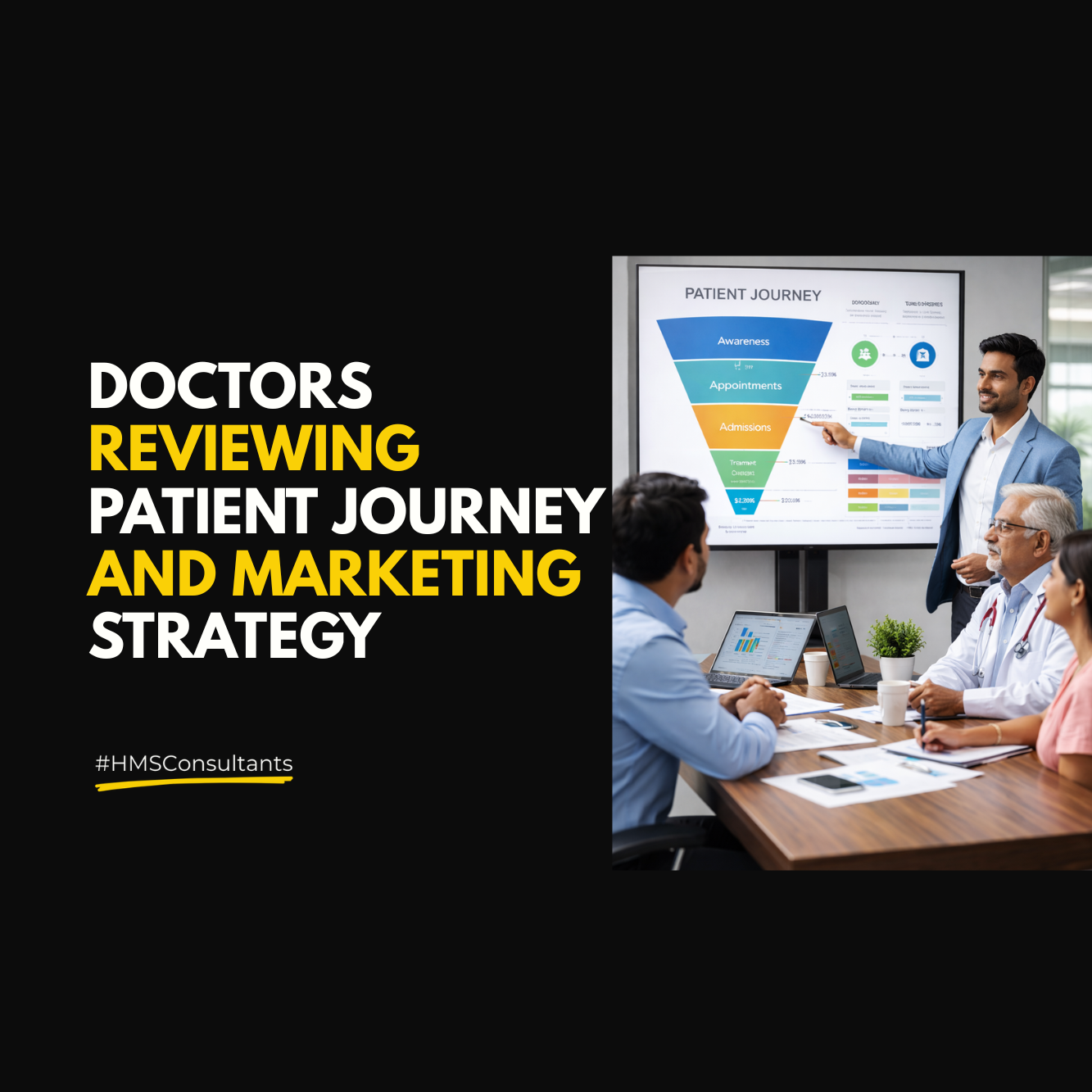
A) Map the journey

Break the funnel into:

  • Awareness
  • Consideration
  • Enquiry
  • OPD
  • Treatment
  • Discharge
  • Follow-up
  • Referral

B) Track 3–5 metrics per stage

Examples:

  • Website to WhatsApp conversion
  • Google Reviews per month
  • Enquiry response time
  • Show-up rate
  • Treatment acceptance
  • Repeat visits
  • Referral percentage

C) Use everyday tools

  • Google Analytics 4
  • Google Business Profile Insights
  • WhatsApp Business analytics
  • Call recordings
  • CRM (basic or advanced)
  • Appointment software
  • Manual staff checklists

D) Review monthly

Discuss findings in management meetings to continuously improve operations.

Patient-reported insights + digital data = the clearest picture of your hospital’s performance.

8. Why Patient Journey Analytics is the Future of Healthcare Growth in India

Because it ensures that:

  • Marketing becomes predictable
  • Patient experience becomes consistent
  • Operations become measurable
  • Staff performance becomes visible
  • ROI becomes trackable
  • Decision-making becomes data-driven
  • Every rupee spent produces results

The most successful hospitals in India have one thing in common:
They know exactly how a patient moves through their system and they optimise every step.

When you understand your patient journey, you do not need massive marketing budgets.
You need clarity, systems, and data.

Conclusion: Every Patient Tells a Story, Your Job Is to Track It

Patient journey analytics is not a technical concept; it is a simple mindset shift.

It means:

  • Stop assuming- Start observing
  • Stop guessing- Start measuring
  • Stop reacting- Start improving

When Indian hospitals adopt this approach, marketing becomes efficient, operations become smoother, and patient care becomes more meaningful.

The future belongs to hospitals that combine:
clinical excellence + digital intelligence + patient empathy.

Understanding the patient journey is the bridge between all three.

Contact Us HMS Consultants

Doctors Digital Marketing I Healthcare Marketing I Hospital Marketing Strategies I Marketing ideas for clinics I Marketing Trends 2025 I Medical Marketing I Social Media Marketing

is something we strongly believe in, which means ‘Knowledge without application is the same as having no knowledge at all

Akhil Dave

Principle Consultant

Ready to take your Personal Brand to the next level?

Share your details below and we will connect with you to discuss your growth strategy.