

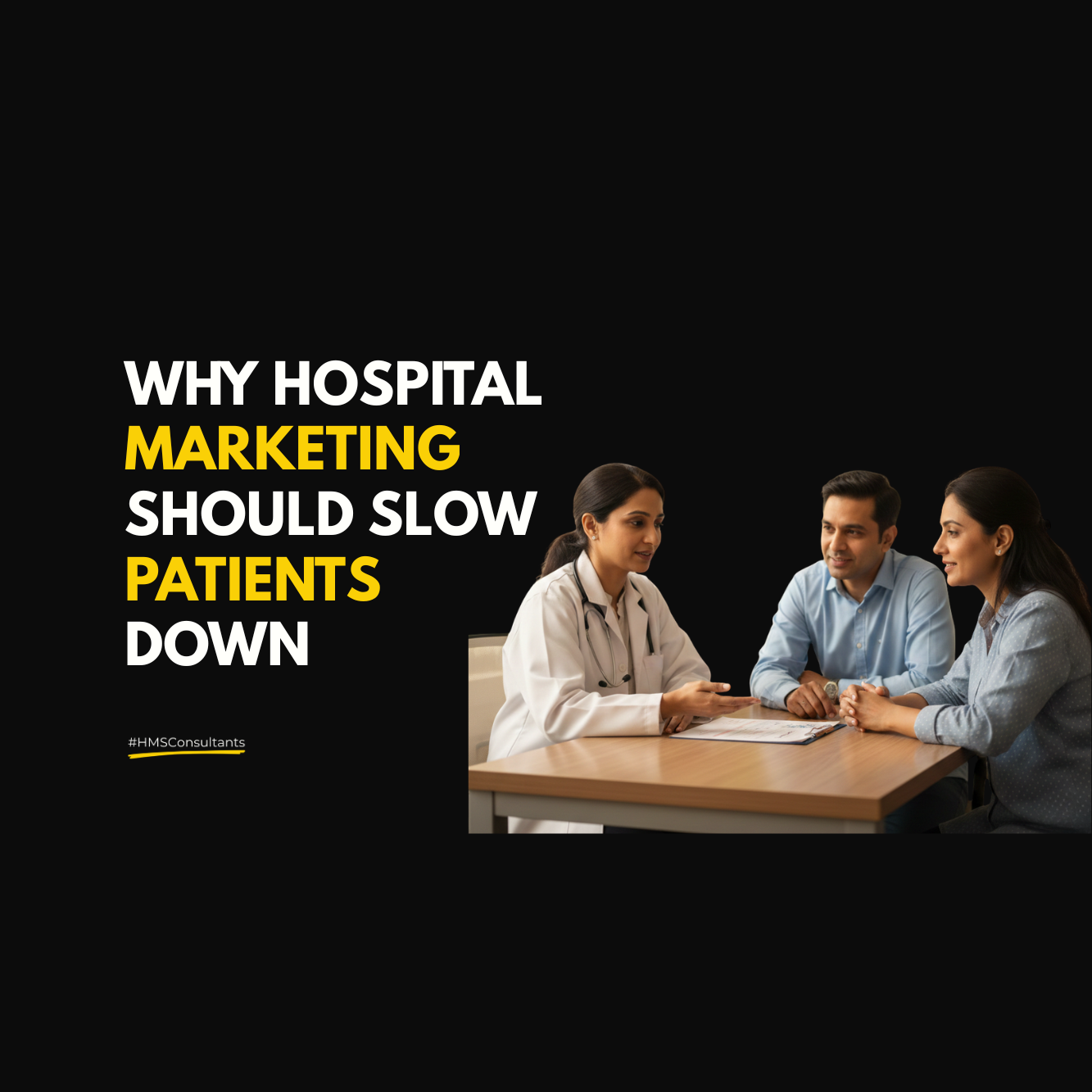
Why Marketing for Hospitals Should Slow Patients Down Before Asking Them to Decide
Marketing for hospitals works when patients feel guided, not rushed. Clear communication and...
Hospitals tend to diagnose growth problems using visible indicators. Low OPD is blamed on competition. Slow expansion is attributed to location or pricing. Inconsistent demand is linked to marketing performance. These explanations feel logical, but they overlook the central issue.
Patients do not experience hospital growth strategies. They experience clarity, confidence, and consistency. When growth plans do not account for how patients perceive and decide, strategy remains disconnected from reality.
A hospital can expand services perfectly and still fail to grow if patient decision-making is ignored.
Leadership views growth through capacity, utilisation, and capability. Patients experience growth through trust, explanation, and reassurance. When these perspectives are misaligned, growth strategies stall.
Patients do not choose hospitals because of expansion plans. They choose hospitals because they feel safe navigating uncertainty there. Growth strategies that do not actively reduce uncertainty fail to convert investment into outcomes.
This is why hospital growth strategy must be built around patient confidence, not just institutional ambition.
In many hospitals, marketing enters the conversation after strategic decisions are finalised. Services are defined, targets are set, and then marketing is asked to “bring patients.”
This sequence is flawed.
Marketing cannot fix a strategy that does not account for patient hesitation. It can amplify visibility, but it cannot create trust where clarity is missing. When marketing is treated as a downstream function, growth becomes volatile and dependent on constant effort.
Effective hospital growth strategy integrates marketing at the decision-design stage, not at the promotion stage.
Hospitals often pursue scale assuming demand will follow. Beds are added. Departments are expanded. Specialists are hired. Yet patients do not automatically flow in.
Readiness matters more than reach. If patients do not understand when to come, whom to trust, or what to expect, scale remains underutilised.
Hospital growth strategy that ignores readiness produces idle capacity instead of sustainable growth.
Trust is rarely written into growth documents, yet it determines whether growth happens at all. Patients delay decisions not because options are unavailable, but because confidence is incomplete.
Growth strategies that focus on numbers without addressing trust mechanics communication, explanation, continuity remain fragile. Any disruption, competition, or pricing pressure destabilises them.
Hospitals that build growth on trust experience steadier demand even in competitive environments.
Hospital growth strategy often assumes experience will “adjust” as scale increases. In reality, experience tends to fragment under pressure. Communication becomes rushed. Processes become complex. Patients feel lost.
When experience deteriorates, growth reverses silently. Patients stop recommending. Follow-ups weaken. Reputation plateaus.
Marketing is often blamed, but the real issue is that growth strategy did not protect experience as a core asset.
A patient-centric growth strategy starts by understanding where patients hesitate and why. It designs communication, processes, and support systems to reduce that hesitation consistently.
Marketing, operations, and leadership align around one objective: making decisions easier for patients. Growth then becomes a by-product of clarity rather than a forced outcome.
Hospitals that adopt this approach grow slower initially but far more predictably over time.
Hospital growth is not linear. It compounds when trust compounds. Strategies that expect immediate acceleration sacrifice long-term stability.
Hospitals that allow growth strategies to mature refining communication, learning from patient behaviour, and improving experience build resilience. They are less affected by competition, pricing pressure, or platform changes.
This patience is what separates scalable hospitals from stagnant ones.
Hospitals do not fail to grow because they lack ambition or capability. They fail because growth strategies are designed internally and imposed externally.
Hospital growth strategy works when it starts from patient psychology, not institutional plans. When patients feel clear, supported, and confident, growth follows naturally.
In healthcare, growth cannot be pushed.
It must be earned through clarity and trust.
Hospitals that understand this stop chasing expansion and start building systems that grow without breaking.
A hospital growth strategy is a structured approach to achieving sustainable increases in patient volume, revenue, and reputation by aligning clinical capability, patient experience, and marketing with how patients actually make healthcare decisions.
Most hospital growth strategies fail because they focus on infrastructure, services, or expansion before addressing patient confidence and decision-making. When growth plans do not reduce patient uncertainty, marketing efforts struggle to convert visibility into real growth.
Hospital growth strategy defines how and why a hospital should grow, while hospital marketing supports that strategy by communicating clarity and trust to patients. Marketing cannot fix a weak growth strategy that ignores patient readiness and experience.
Marketing should be involved early because it provides insight into patient hesitation, trust gaps, and decision behaviour. When marketing is added only after strategic decisions are finalised, growth becomes dependent on promotion rather than clarity.
Yes. Patient trust is central to hospital growth strategy. Patients delay or avoid decisions when trust is incomplete, regardless of service availability or infrastructure. Growth becomes predictable only when trust is built consistently across the patient journey.
Yes. Many hospitals achieve growth by improving clarity, communication, and patient experience rather than expanding capacity. A strong hospital growth strategy often unlocks underutilised demand before requiring physical expansion.
Hospital growth slows when new services are added without helping patients understand when, why, and how to use them. Without clarity and reassurance, additional services increase complexity rather than demand.
A hospital growth strategy shows early signals through improved patient confidence and smoother decision-making, but sustainable growth builds gradually as trust compounds. Long-term strategies outperform short-term growth pushes.
Patient experience is a core driver of hospital growth strategy. Inconsistent or confusing experiences weaken referrals, repeat visits, and reputation, even if marketing visibility is high.
A hospital growth strategy becomes sustainable when it prioritises patient clarity, integrates marketing early, protects experience during scale, and allows learning cycles to mature instead of resetting strategy frequently.
Share your details below and we will connect with you to discuss your growth strategy.
Marketing for hospitals works when patients feel guided, not rushed. Clear communication and...
Doctors digital marketing fails when it is treated as promotion instead of professional...
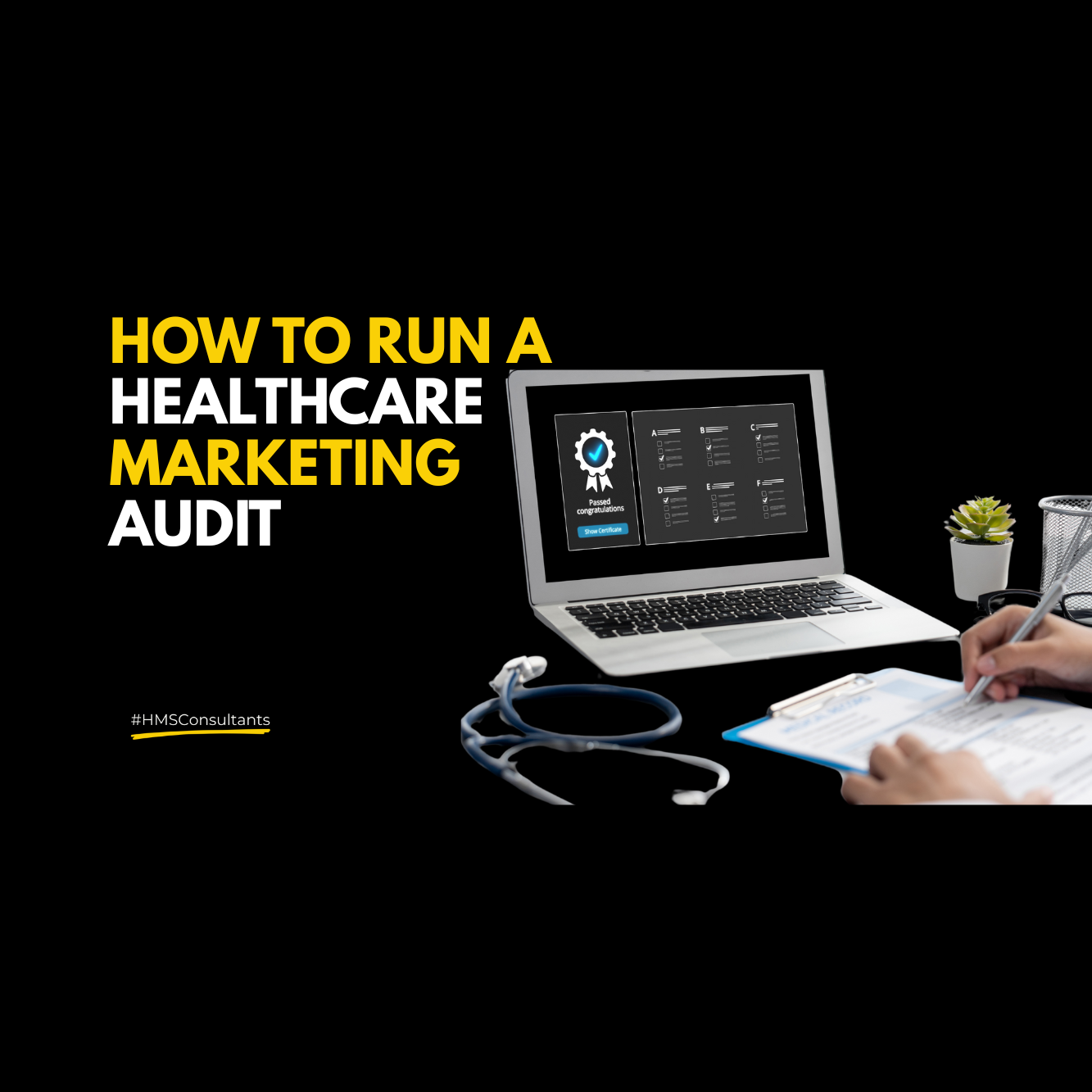
A step-by-step guide to auditing your healthcare marketing strategy. Fix visibility gaps, enhance...

Hospitals and food apps may be different, but both depend on trust, transparency,...

In the digital age, search engines have become the primary tool for individuals...

In the rapidly evolving digital landscape, healthcare providers, including doctors, clinics, and hospitals,...