


Why “Best Hospital Near Me” Is Decided Before a Patient Visits And What Most Doctors Miss
Patients often decide which hospital to visit before their first consultation. Searches like...
Early success in hospital marketing is usually driven by novelty. New campaigns capture attention. Fresh content stands out. Platforms reward initial activity. Internal teams feel energised by visible movement. For hospitals that previously had little structure, even basic consistency produces noticeable improvement.
This phase creates a dangerous illusion. Leadership assumes that repeating the same efforts will continue delivering growth. Marketing is seen as a repeatable activity rather than an evolving system.
The problem is that novelty fades quickly in healthcare. Trust, unlike attention, does not compound automatically.
Healthcare marketing fails after the first year because most hospitals build campaigns, not engines.
Campaigns are time-bound. They depend on constant input, fresh creatives, new platforms, and increasing budgets. Engines, on the other hand, are systems that improve with use. They learn, adapt, and compound insight over time.
When marketing is campaign-led, growth depends on continuous stimulation. When stimulation stops or becomes repetitive, performance declines. Hospitals then chase new ideas without fixing the underlying structure.
This is why marketing fatigue sets in for both teams and audiences.
Healthcare leaders operate in high-pressure environments. Monthly numbers matter. OPD fluctuations create anxiety. Budget reviews demand justification. Under these conditions, short-term performance naturally dominates decision-making.
Marketing strategies are adjusted frequently as directions change. Platforms are switched. Messaging resets. While these changes feel proactive, they often disrupt learning cycles. Marketing never gets enough time to mature, and insights are lost before they compound.
Long-term growth requires patience that healthcare systems rarely allow themselves.
When marketing underperforms, hospitals often increase activity rather than improve strategy. More posts, more ads, more platforms, more content. This creates motion without direction.
Over time, activity becomes disconnected from outcomes. Teams focus on execution rather than learning. Reports show effort, not progress. Leadership feels busy but not confident.
This is the point where marketing becomes exhausting rather than enabling.
Sustainable healthcare marketing is not about constant visibility. It is about building systems that repeatedly reduce patients’ uncertainty.
Patients return, refer, and trust when they experience consistency. Consistency does not come from campaigns. It comes from aligned messaging, predictable experience, and clear decision pathways.
Hospitals that grow steadily treat marketing as a long-term investment in trust infrastructure, not a series of promotional bursts.
A long-term marketing engine is built around learning loops rather than output targets. Each year strengthens the next. Patient questions inform content. Interaction patterns refine messaging. Experience gaps shape communication. Reviews influence education. Referrals reinforce positioning.
Instead of resetting strategy annually, hospitals deepen it. Marketing becomes calmer, clearer, and more efficient over time. Spend stabilises. Conversion improves. Dependence on aggressive promotion has reduced.
This is how marketing shifts from a cost centre to a growth asset.
Counterintuitively, long-term marketing thinking reduces expenditure. Hospitals that build engines rely less on constant acquisition because retention and referrals improve naturally. Content remains relevant longer. SEO authority compounds. Brand trust strengthens.
Short-term marketing requires escalation. Long-term marketing rewards consistency.
From a hospital growth perspective, this difference determines whether marketing remains manageable or becomes a perpetual struggle.
No marketing engine survives without leadership alignment. Leaders must protect the strategy from constant disruption. They must allow learning cycles to complete. They must evaluate trends rather than isolated months.
Hospitals that treat marketing as a leadership agenda rather than a departmental task are far more likely to sustain growth beyond the first year. Strategy continuity becomes a competitive advantage.
When marketing feels stale, many hospitals restart rather than refine. New agencies, new platforms, new directions. Each restart discards accumulated insight. The system never matures.
Hospitals that evolve rather than restart carry learning forward. They optimise, not replace. Growth becomes incremental but durable.
This distinction separates organisations that survive from those that scale.
Healthcare marketing fails after the first year, not because it stops working, but because it was never built to last.
Campaign-driven growth peaks quickly and declines just as fast. Engine-driven growth compounds quietly and steadily. Hospitals that understand this difference stop chasing novelty and start building systems.
In healthcare, where trust is earned slowly and lost quickly, long-term marketing is not optional. It is the only form of marketing that truly works.
Hospitals that invest in five-year thinking do not just grow.
They stabilise, mature, and earn the right to scale.
Healthcare marketing often plateaus after the first year because most hospitals rely on short-term campaigns instead of long-term systems. Campaigns lose effectiveness as novelty fades, while sustainable growth requires compounding trust and learning over time.
Healthcare marketing failure is usually gradual. Performance erodes slowly when strategies are not designed for longevity, learning, and consistency. What feels like a sudden drop is often long-term structural weakness.
Hospital marketing campaigns lose effectiveness because they depend on constant stimulation—new creatives, higher budgets, and frequent resets. Without an underlying growth engine, performance declines as audiences and platforms fatigue.
The biggest mistake hospitals make is treating marketing as an activity rather than a system. Focusing on output posts, ads, and platforms without building learning loops prevents long-term growth.
A healthcare marketing engine is a long-term system that improves with time. It uses patient interactions, questions, reviews, and behaviour data to continuously refine messaging, trust, and conversion without constant reinvention.
Share your details below and we will connect with you to discuss your growth strategy.
Patients often decide which hospital to visit before their first consultation. Searches like...
Not all marketing agencies are built for healthcare. Learn how to choose one...
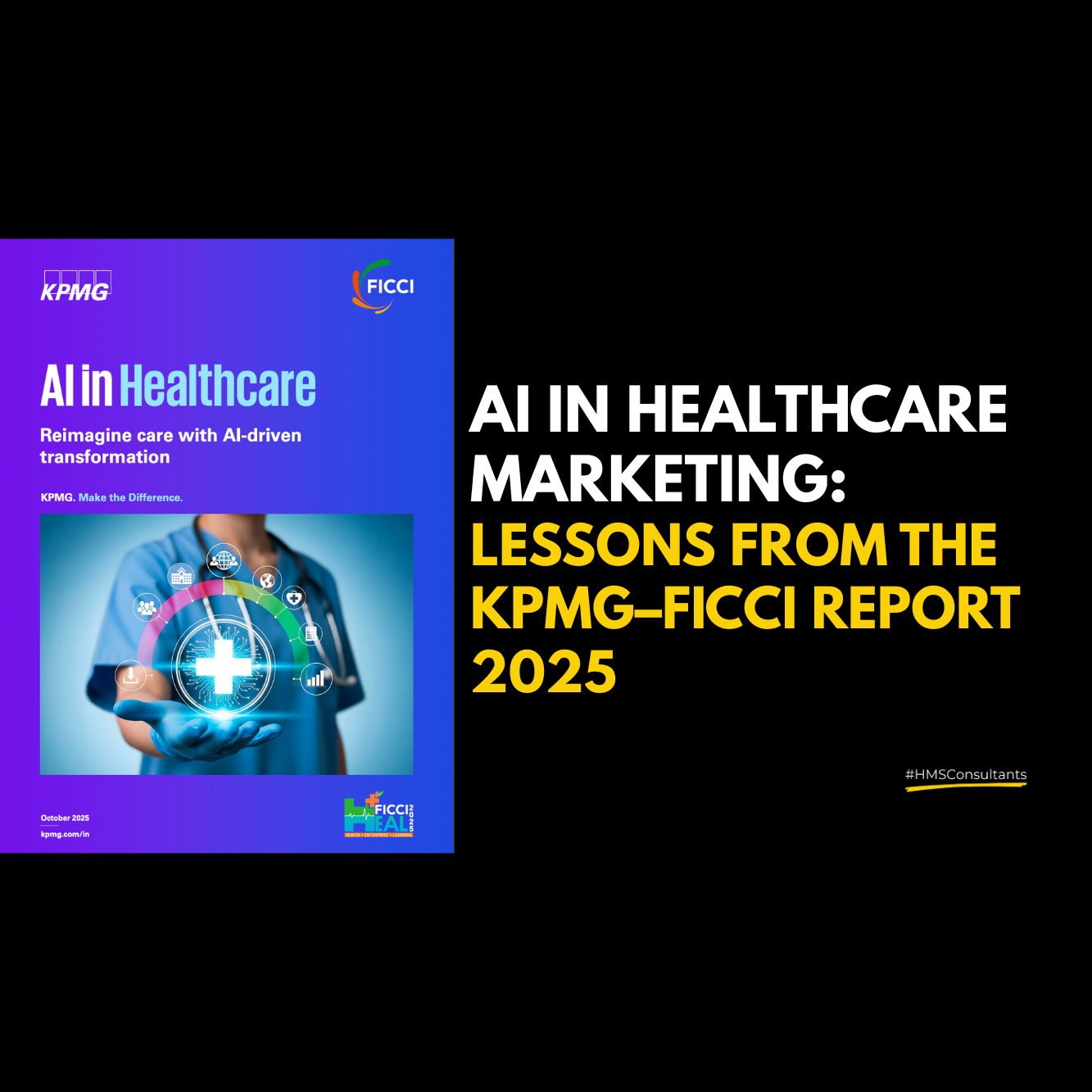
Discover how AI is transforming healthcare marketing with smart patient acquisition, engagement, and...
Learn how local SEO can turn searches into real patient visits. Optimize Google...

Discover how clinics can grow patient footfall and revenue using ethical, NMC-compliant online...
Most hospital websites fail because patients leave unconvinced. Clear guidance, reassurance, and trust-building...