

Why a Hospital Marketing Consultant Is Brought In Too Late and What That Delay Actually Costs
A hospital marketing consultant is often hired too late when growth slows and...
Social media metrics are comforting because they are immediate and easily measurable. A post performs well, engagement rises, reach expands, and the team feels reassured. For leadership, these numbers offer a sense of control and progress in an otherwise complex healthcare marketing environment.
The problem is that visibility metrics measure reaction, not decision-making. In healthcare, reactions are cheap. Decisions are expensive. A patient may like a post without trusting the hospital. They may watch a reel without intending to seek care. They may follow a page out of curiosity, not conviction.
When hospitals confuse attention with intent, they overestimate marketing performance and lose strategic clarity.
In consumer brands, engagement often correlates with purchase behaviour. In healthcare, this relationship breaks down. Patients engage with content for many reasons, such as fear, curiosity, anxiety, or general awareness, none of which guarantee readiness to act.
A highly engaged post about symptoms may attract people who are worried but not prepared to visit a hospital. A viral reel may bring followers from outside the hospital’s service area. Educational content may be saved and shared without ever translating into OPD.
From a healthcare marketing strategy perspective, engagement measures interest, not confidence. Growth depends on confidence.
Social media platforms are designed to reward content that keeps users scrolling, not content that drives healthcare decisions. Algorithms prioritise emotion, novelty, relatability, and frequency. Content that performs well algorithmically is not always content that builds medical credibility.
Hospitals that chase algorithm-friendly metrics often dilute their messaging. Simplified soundbites replace educational depth. Clinical nuance is sacrificed for engagement. Over time, this creates a brand that is visible but shallow.
This is why many hospitals experience high social media activity with slight improvement in patient quality or conversion. The platform’s goals are misaligned with the hospital’s goals.
Hospitals optimise what they are shown. Most social media reports emphasise reach, engagement, and follower growth because those are the easiest to display. Metrics that reflect real healthcare marketing performance, such as enquiry quality, patient readiness, consultation efficiency, and repeat visits, sit outside social dashboards.
As a result, teams spend months improving metrics that look good internally but do not influence external growth outcomes. Leadership reviews numbers that look positive while underlying performance remains unchanged.
This creates a false sense of progress and delays necessary strategic correction.
Real growth indicators in healthcare marketing are quieter and slower to show, but far more reliable. They reflect changes in patient behaviour, not platform behaviour.
When marketing is effective, hospitals notice that enquiries become more specific and informed. Patients arrive with clearer expectations. Consultation time is used more productively. Treatment acceptance improves. Follow-ups become easier. Referrals increase without prompting.
These outcomes are rarely captured in social media reports, yet they are the actual signals of marketing maturity.
Social media is a powerful awareness and education channel, but it is a poor primary success metric. Hospitals that treat social platforms as the centre of their marketing strategy often end up optimising for noise rather than outcomes.
In a mature healthcare marketing system, social media supports larger objectives. It reinforces trust built elsewhere. It prepares patients for conversations. It aligns expectations with reality. It complements websites, enquiry handling, patient experience, and referral systems.
When social media is isolated from this system, it becomes performative rather than productive.
Optimising for vanity metrics has long-term consequences. Content strategies drift away from patient needs. Teams become reactive to algorithm changes. Leadership loses visibility into what is actually driving growth. Marketing decisions become increasingly disconnected from operational reality.
Eventually, hospitals are forced to spend more for the same outcomes because trust was never built in the first place.
From a hospital growth perspective, this is one of the most expensive mistakes organisations make, not because social media is ineffective, but because it is misunderstood.
Hospitals that use social media effectively treat metrics as directional signals, not success indicators. They observe trends without being governed by them. They correlate social activity with downstream outcomes rather than evaluating it in isolation.
Most importantly, they understand that social media is a means of pre-conditioning trust, not closing decisions. When used with this clarity, social platforms contribute meaningfully to growth without distorting strategy.
The loudest numbers in hospital marketing are often the least important. Likes, views, and reach create the illusion of success without guaranteeing impact. Real growth shows up in calmer ways in patient confidence, operational ease, referral consistency, and long-term trust.
Hospitals that want sustainable growth must learn to look beyond social media dashboards and ask harder questions about behaviour, readiness, and experience.
In healthcare marketing, what feels measurable is not always what matters.
And what truly matters often takes longer to show, but lasts far longer when it does.
Share your details below and we will connect with you to discuss your growth strategy.
A hospital marketing consultant is often hired too late when growth slows and...

Public relations in a hospital is not about media or advertising, but about...
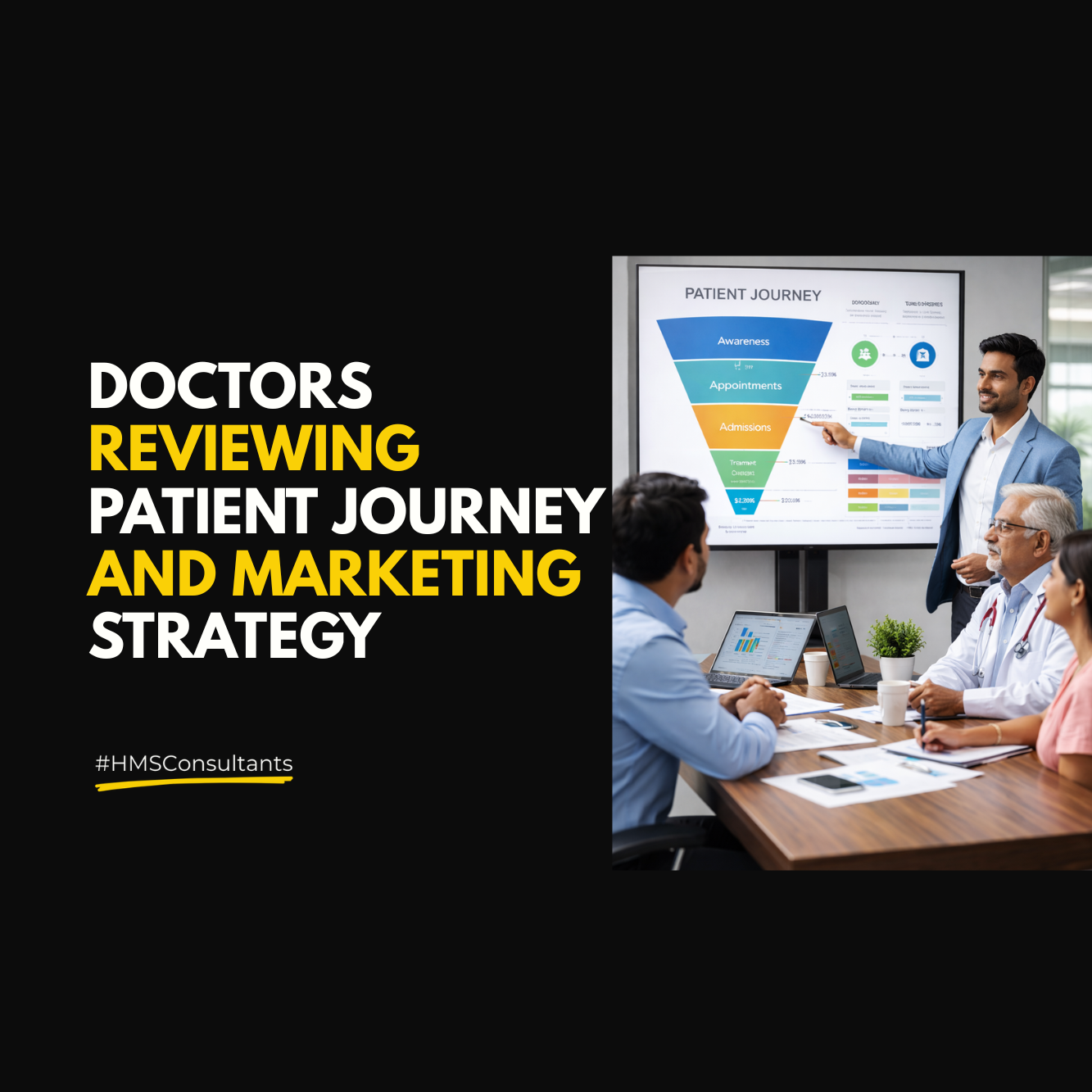
A hospital marketing expert can identify hidden friction in the patient journey within...

Patients often decide which hospital to visit before their first consultation. Searches like...

Clinic marketing strategy guide for doctors explaining why OPD becomes inconsistent, why patients...
Hospital patient experience often breaks silently before complaints surface, weakening patient trust, referrals,...